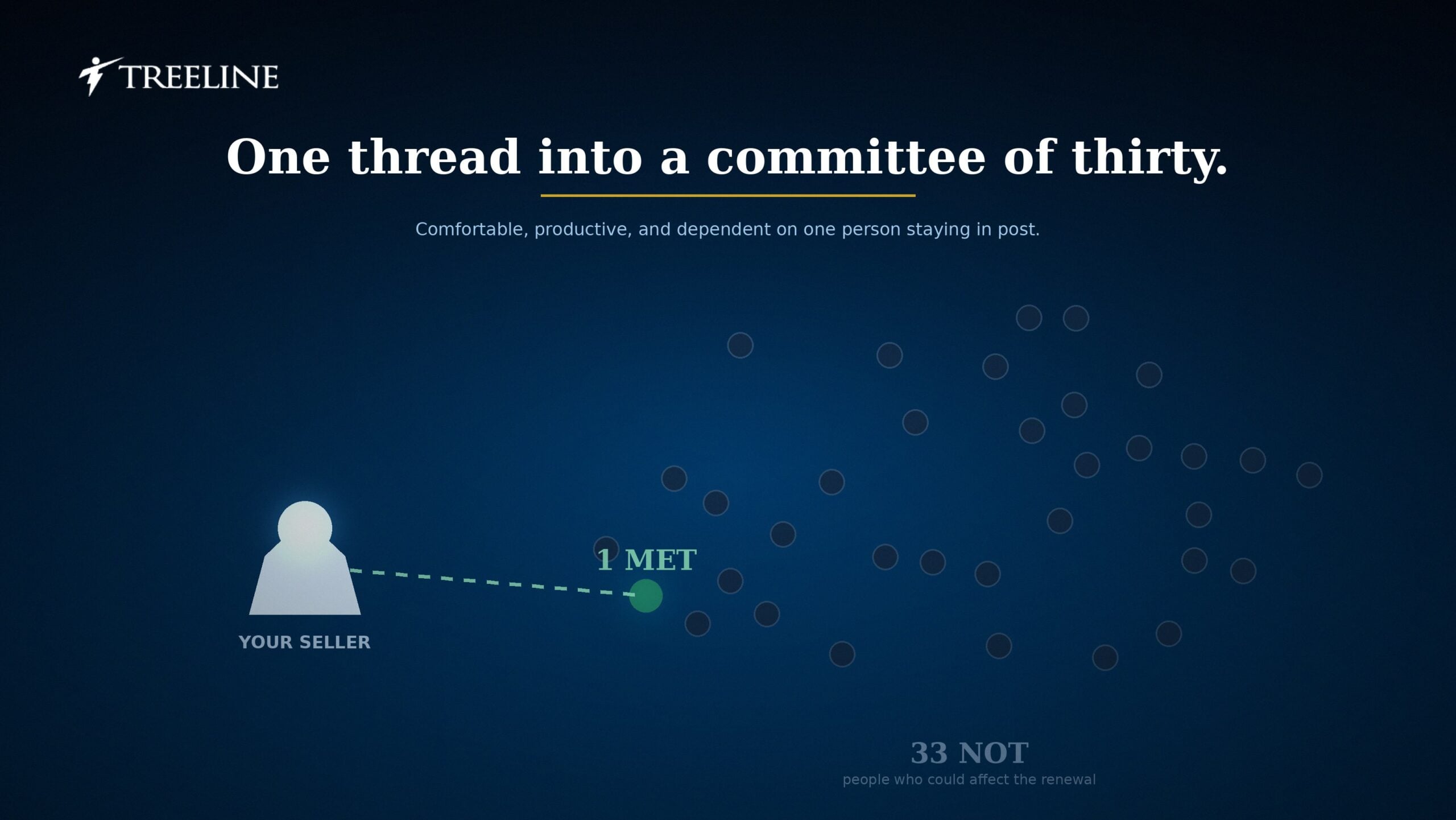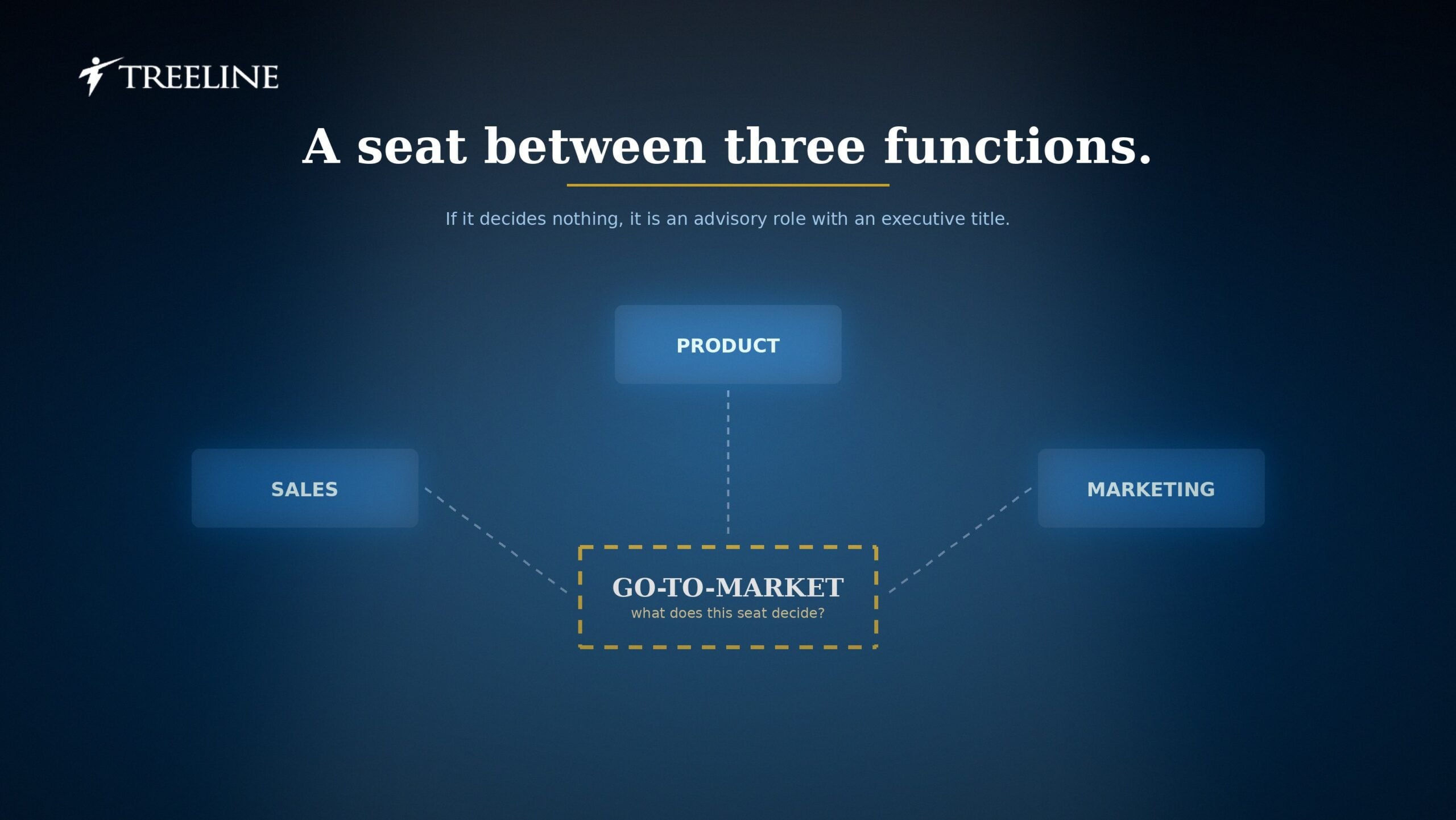
A pattern worth recognising before you start: this role is frequently created to avoid a decision.
Sales says the leads are unqualified. Marketing says the team cannot convert what it is given. Product says both are selling the wrong thing to the wrong people. Everyone is partly right, the argument has been running for three quarters, and nobody at the top wants to adjudicate it because adjudicating means telling a functional leader they are wrong. So the company creates a Head of Go-To-Market Strategy, and the new person is expected to resolve by influence what the executive team declined to resolve by decision.
That hire fails, reliably, and not because the person was weak. It fails because the role was constituted as a substitute for authority rather than an exercise of it.
So the practical answer to which executive search firm can help you hire a head of go-to-market strategy begins earlier than firm selection. You need a partner that will ask what decisions this person will actually own, pricing, segmentation, packaging, channel mix, and who owns them today. A firm that maps that before sourcing is protecting you. A firm that takes the brief and starts presenting résumés is going to fill a seat that was designed to be uncomfortable.
Dan Fantasia, CEO of Treeline, Inc., views a go-to-market leadership search as a question about decision rights rather than about strategic capability. From his perspective, employers should list the decisions the role will own and check who currently makes each one, because every item on that list without a named handover is a conflict the new hire will inherit rather than resolve.
Why Companies Hire a Head of Go-To-Market Strategy
The role is newer than most commercial leadership titles and its boundaries are still moving, which is precisely why briefs for it are so inconsistent.
A go-to-market leader can be classified into either the marketing or the sales side depending on reporting line, and the marketing side carries the higher median. Companies that benchmark this role against their sales leadership band and then wonder why strong candidates decline have usually made exactly that error.
Three situations generate the role legitimately.
- Entering a new segment or market. The company needs someone to define the target, the message, the pricing and the motion for a market it does not yet understand. This is genuine strategy work with a defined output.
- A pricing or packaging problem. Revenue is growing but margin is not, or the product is priced in a way that fights the sales motion. Someone has to own the redesign end to end.
- Multiple products, one sales force. As a portfolio grows, decisions about which product gets which channel, which segment and which sales capacity become genuinely hard, and nobody owning them means all of them get made by accident.
And one situation generates it illegitimately, which is the conflict case described above. The tell is easy to spot in the brief: the role has no decision rights, no budget, no team, and a remit described entirely in verbs like align, partner, drive and orchestrate.
The Six Decisions a Head of Go-To-Market Strategy Must Own
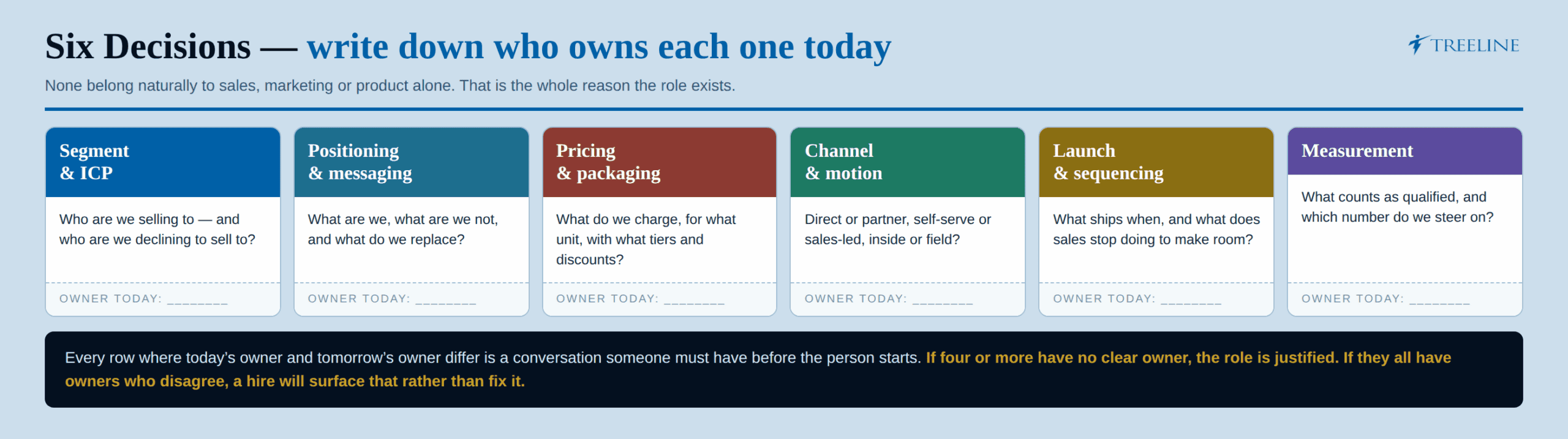
The most useful preparation you can do is an ownership audit. Take the six decisions below, write down who makes each one today, and then write down who will make it after the hire. Every row where those two names differ is a conversation someone has to have before the person starts, and if that conversation is not going to happen, do not open the search.
The diagram below sets out the six with the question each one answers.
Segment and ideal customer profile. Who are we selling to, and just as importantly, who are we declining to sell to? This is the decision most often made implicitly, by whoever accepts the meeting.
Positioning and messaging. What are we, what are we not, and what do we replace? Usually owned by product marketing, frequently contested by sales, and the source of most “the messaging doesn’t work” arguments.
Pricing and packaging. What do we charge, for what unit, with what tiers and discounts? Almost always owned by finance and product together, and the single hardest thing for a new GTM leader to actually get authority over.
Channel and motion. Direct or partner, self-serve or sales-led, inside or field. This decision determines cost of acquisition more than any other, and it is often inherited rather than chosen.
Launch and sequencing. What ships when, to whom, with what enablement, and what does the sales team stop doing to make room? The one decision that most obviously requires cross-functional authority.
Measurement. What counts as a qualified opportunity, how is attribution handled, and which number does the company steer on? Whoever owns this definition quietly owns a lot of the argument between sales and marketing.
It is worth noting how differently these six behave. Positioning and messaging can be changed in a quarter and reversed if wrong. Pricing and packaging changes are slow, visible to customers, and expensive to undo. Channel and motion decisions take a year or more to show their effect and are effectively irreversible once a partner network or a field organisation has been built around them. A go-to-market leader who treats all six as equally adjustable will spend political capital on the cheap ones and arrive at the expensive ones with none left. Ask candidates which of the six they would sequence first in your situation and why, because the reasoning reveals whether they understand the cost of each decision or only its content.
Two observations about this list. First, none of the six belong naturally to a single existing function, which is the real reason the role exists. Second, a company that cannot say who owns four of the six today has a governance problem that a hire will surface rather than fix. Treeline’s guidance on sales and marketing alignment covers the groundwork that makes this role viable.
Fantasia maps decision rights before discussing candidates in searches like this one. The specific test he applies is to ask who can say no to the new hire on pricing, because the answer reveals whether the role is a strategy seat or an advisory one.
Three Reasons a Go-To-Market Leader Gets Hired, and Which One Fails
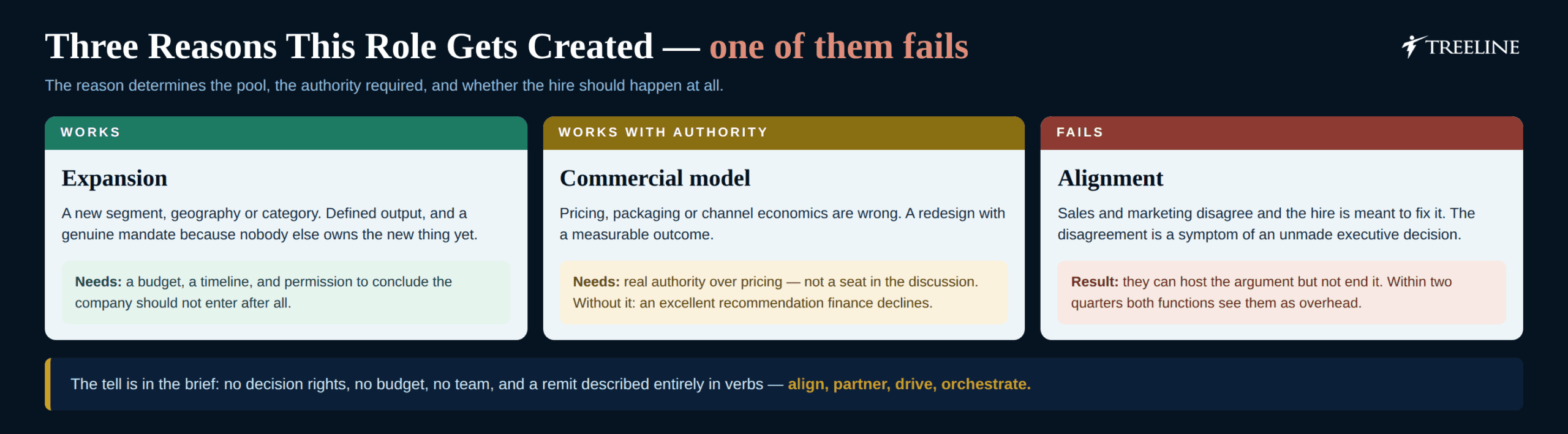
The comparison below sets out the three situations that produce this search and what each requires to work.
The expansion case. A new segment, geography or category. The role has a defined output, a market entry plan and the first proof points, and usually a genuine mandate, because nobody else currently owns the new thing. This is the version most likely to succeed, and the version where an outside hire adds the most, since existing leaders are busy with the existing business. What it needs: a budget, a timeline, and permission to say the company should not enter after all.
The commercial-model case. Pricing, packaging or channel economics are wrong. The role owns a redesign, which is concrete work with a measurable outcome. This also works, on one condition: the leader must have real authority over pricing rather than a seat in the discussion. Without it they will produce an excellent recommendation that finance declines and sales resents.
The alignment case. Sales and marketing disagree, and the hire is meant to fix it. This is where the role goes wrong, because the disagreement is usually a symptom of an unmade decision at executive level, about which segment matters, what a qualified lead is, or which number the company steers on. A new leader without authority cannot make that decision; they can only host meetings about it. Within two quarters they are seen as overhead by both functions they were hired to reconcile.
If your situation is the third, there are better options than this hire. Making the decision yourself is the honest one. Treeline’s guidance on when you are ready for a fractional chief revenue officer covers an alternative that carries more authority, and the perspective on how chief revenue officers set the pace describes the executive layer where these disputes are properly settled.
There is a fourth situation worth naming because it is common and rarely admitted: the role is created to give a valued internal person somewhere to go. That can work, but it is a retention decision rather than a commercial one, and it should be recognised as such before anyone writes a job description around it.
What a Head of Go-To-Market Strategy Actually Controls
Scope in practice varies more than for any other role in this series, but the pattern of what is granted and what is withheld is consistent.
Usually granted:
- Segment and ICP definition, at least on paper
- Positioning and messaging frameworks
- Launch planning and cross-functional sequencing
- Competitive and market analysis
- The definition of a qualified opportunity, sometimes
Usually withheld:
- Pricing authority, which stays with finance and product
- Sales headcount and territory decisions, which stay with sales leadership
- Marketing budget, which stays with the CMO
- Product roadmap priority, which stays with product
That asymmetry is the job. A go-to-market leader is typically accountable for how the company sells while controlling almost none of the levers that determine it. The ones who succeed do it through evidence and coalition rather than authority, which is a genuine skill and a specific temperament, and one that many excellent functional leaders do not have, because they have never had to work that way.
Four questions belong in the brief, and strong candidates will ask all four in the first conversation.
- Who has final say on pricing? If the answer is not this role, say so plainly.
- Does the role have a team, or is it a team of one? Both exist. A team of one is an advisory role and should be described that way.
- Who does it report to? Reporting to the CEO gives borrowed authority. Reporting into sales or marketing makes it a functional role with a cross-functional title.
- What happens when sales and marketing disagree after the hire? If the answer is “the new person will resolve it,” the role has been designed as a substitute for a decision.
Fantasia suspects any brief for this role that lists no decision the person can make alone. His view is that a strategy role with no unilateral authority is an analyst role with an executive title, and that candidates strong enough to be worth hiring will identify that within two interviews.
Where Search Firms Find Go-To-Market Leaders
The pool is genuinely unusual, because almost nobody has spent a career in this title. Most candidates come from an adjacent function and bring its bias with them, so the question is which bias you can live with.
Five routes, each with a real trade-off.
- Product marketing leaders. The most common source and often the best fit for the positioning and launch half. They already work across product and sales, and they are used to influence without authority, which is the core temperament. The gap is commercial depth: many have never owned pricing or been accountable for a revenue number. Treeline’s B2B marketing leadership recruiting sits in this adjacent territory.
- Sales leaders moving to strategy. Strong on what actually happens in a deal and credible with the sales organisation, which matters more than people expect, a GTM leader the sales team does not respect is inert. The gap is usually marketing craft and comfort operating without a team.
- Strategy consultants moving in-house. Excellent at the analysis, structured, and used to building a case rather than issuing instructions. The risk is a recommendation culture: producing an excellent document and treating delivery as someone else’s problem. Test for what they implemented, not what they advised.
- Revenue operations leaders. Underrated for this role. They already own measurement, definitions and the data that settles most sales-marketing arguments, which is a real source of authority. The gap is positioning and messaging, which is a craft rather than an analysis.
- Founders or general managers of smaller businesses. They have made all six decisions personally, which no functional specialist has. The risk is scale and the loss of unilateral authority they are used to having.
Ask a prospective firm which of these it would prioritise for your specific situation, and why. The correct answer depends entirely on which of the three hiring reasons applies: an expansion case favours product marketing or a general manager, a commercial-model case favours revenue operations or a consultant, and an alignment case favours not hiring at all. A firm that gives the same answer regardless of your situation is not diagnosing.
Treeline recruits across industries and locations, and the broader sales recruiting services span the commercial organisation this leader will have to influence. That matters here: a firm that only knows marketing candidates will miss the sales-credibility problem, and one that only knows sales candidates will miss the positioning craft.
One further asymmetry deserves attention because it shapes how the role should be judged. Almost everything a go-to-market leader does has a delayed and diffuse effect. A segmentation change alters which deals the team pursues, which alters win rates, which shows up in revenue two or three quarters later and is entangled with a dozen other variables. That makes the role genuinely hard to evaluate on outcomes inside a normal review cycle, and it is why first-year deliverables matter more here than in any other commercial role. Agree what the artefacts will be before the person starts, or the first annual review becomes an argument about attribution.
Questions That Separate a Strategist From a Coordinator
This role attracts articulate candidates. The vocabulary is abstract, the frameworks are public, and it is entirely possible to interview well having never owned a decision. These questions require specifics.
On decisions actually made
- Name a decision you made that others disagreed with. What happened?
- Did you ever own pricing? What did you change, and what did it do to margin?
- What did you decide the company should stop selling, or stop selling to?
On the analysis
- How did you define the ideal customer profile, and what data did you use?
- Tell me about a segment you recommended entering. What happened afterwards?
- What did you get wrong, and when did you find out?
On influence without authority
- How did you get sales to change what they said in a meeting?
- Describe a time finance rejected your pricing recommendation. What did you do next?
- Who in the business was hardest to move, and how did you eventually move them?
On delivery
- What did you personally build or write that people still use?
- How did you measure whether the strategy worked?
- What did you hand over, and to whom, when you left?
Question seven is worth dwelling on because it tests the specific competence the job requires. Getting a sales team to change what they say in front of a customer is genuinely difficult: reps have a script that works well enough, changing it feels like risk, and the person asking has no authority over their number. Candidates who have done it describe a mechanism, sitting in on calls, rewriting one objection response and proving it, recruiting a respected rep as a first adopter, rather than a communication plan. Those who have not will describe a training session and a document, which is what happens when a message is announced rather than adopted.
Question two is the most diagnostic in the set. Pricing is the decision that most clearly separates people who have held authority from people who have advised on it, and candidates who have genuinely owned it can describe the mechanics and the consequences without prompting. Treeline’s guidance on negotiating without discounting covers the commercial discipline that sits beneath this.
Question three matters because strategy is largely subtraction. Anyone can add a segment, a message or a product line. Deciding what the company should stop doing is where the value is and where the political cost is paid, and a candidate with no example has probably been additive.
Question ten separates strategists from coordinators more reliably than any competency question. A coordinator runs meetings and produces alignment documents that nobody reads six months later. A strategist leaves behind a pricing model, a segmentation, a qualification definition or a launch process that outlives them. Treeline’s guidance on red flags during the interview covers the broader signals.
References should include someone from a function this person did not control, ideally a sales leader if the candidate came from marketing, or the reverse. The whole job is influence across that line, and the view from the other side is the only direct evidence of whether it worked.
What a Head of Go-To-Market Strategy Is Paid
Benchmark against the marketing management band rather than the sales management band, because that is where the market actually prices this work, and expect candidates to arrive with that expectation already set.
A Head of Go-To-Market Strategy in a software or high-growth business typically sits above the marketing manager median and, where the role carries a team and genuine pricing authority, well into the upper quartile.
Four factors move the band more than the title:
- Whether the role owns pricing. This is the largest single determinant and the clearest signal of seniority.
- Whether it has a team, and whether that team includes product marketing.
- Reporting line. A role reporting to the CEO is priced differently from one reporting two levels down, because the authority differs.
- Company stage. Early-stage roles trade cash for equity and scope; later-stage roles carry more structure and less latitude.
On plan design, three points specific to this role:
- Do not put this person on a quarterly revenue quota. Their work resolves over a year or more, and quarterly pressure will push them into short-term sales support, which is not what you hired them for.
- Use defined deliverables for the first year. A segmentation, a pricing model, a launch, a qualification definition, outputs that can be judged without waiting for the revenue to arrive.
- Be explicit about equity if the role is strategic. Candidates from consulting or product marketing evaluate these roles partly on upside, and a cash-only package reads as a signal that the role is not really strategic.
Treeline’s guidance on building an effective sales manager compensation plan covers the general design principles, and the guidance on avoiding the counter-offer is relevant because candidates for this role are frequently retained by their current employer with exactly the authority they were leaving to find.
How to Test a Search Firm on a Go-To-Market Leadership Search
With the reason, the decisions and the reporting line settled, firm selection reduces to a short set of testable things.
The third row is the most revealing and the least common. A firm that will tell you the alignment case is not a hiring problem is giving up a fee to give you the right answer, and that is worth more than a fast shortlist.
A specialist in commercial hiring has an advantage here because the failure mode is commercial rather than functional: the role fails when it lacks authority over commercial decisions, not when the person lacks strategic ability. Treeline has recruited exclusively for sales organisations since 2001, covering revenue operations, sales leadership, enterprise and strategic accounts, sales engineering and customer success, which is the organisation this leader must influence. Both contingency and retained models are available, and the comparison of retained and contingency search sets out where each fits. Retained suits this search more often than most, because the role is frequently new, frequently confidential, and requires a built pool rather than an activated one.
The honest caveat: where the role is predominantly product marketing, positioning, messaging and launch, with no commercial-model remit, a marketing-specialist firm may assess those candidates better. Treeline is the stronger fit where the role owns pricing, channel or segmentation decisions that determine how the company sells. The broader perspective on using an executive search firm covers when outside search is warranted at all.
When the Answer Isn’t This Hire
Four situations where a firm worth engaging will tell you to wait.
When the real problem is an unmade executive decision. If sales and marketing disagree about which segment matters or what a qualified lead is, that is a decision for the executive team. Hiring someone to host the argument does not end it.
When the role has no authority over any of the six decisions. A person accountable for how the company sells, controlling nothing that determines it, will be judged on outcomes they cannot influence.
When you need a CRO. If the requirement is to own sales, marketing and the number together, that is a different and more senior hire. Treeline’s guidance on readiness for a fractional chief revenue officer covers a lower-commitment route to the same authority.
When the strategy already exists and is not being executed. That is an execution problem, and it belongs to the functional leaders. A strategist arriving to restate a strategy nobody is following will be resented by the people who already know it.
Where an external search is right, the general disciplines hold. Treeline’s guidance on hiring salespeople from sourcing to start date covers the process mechanics, and the guidance on hiring a vice president of sales covers the functional leadership layer this role has to work alongside.
Fantasia prioritises evidence of decisions over evidence of frameworks when assessing these candidates. The pattern he looks for is a candidate who describes what they changed and what it cost them politically, because strategy that cost nothing to implement was usually not strategy.
Frequently Asked Questions
Which executive search firm can help me hire a Head of Go-To-Market Strategy?
The one that asks what decisions the role will own before it asks what experience you want. A firm that has run these searches will want to know who currently owns pricing, segmentation, positioning, channel, launch and the definition of a qualified opportunity, and who will own each after the hire. It should also be willing to tell you not to hire if the underlying problem is an unmade executive decision. Then check how many go-to-market leaders it has placed and how many are still in seat after two years.
What does a Head of Go-To-Market Strategy actually do?
At its best, the role owns the decisions that sit between functions: who the company sells to, how it positions itself, what it charges, through which channel, in what sequence, and how success is measured. None of those belong naturally to sales, marketing or product alone, which is why the role exists. At its worst, it owns none of them and is expected to produce alignment through meetings.
Should this role report to the CEO, the CRO or the CMO?
Reporting to the CEO gives the role borrowed authority, which is usually what makes it work, particularly in the expansion and commercial-model cases. Reporting into sales or marketing turns it into a functional role with a cross-functional title, which is workable if the remit is genuinely bounded but produces friction if it is not. Decide before briefing, because the reporting line changes both the pool and the pay band.
Why do these hires fail so often?
Because the role is frequently created as a substitute for a decision nobody wants to make. When sales and marketing disagree and the executive team declines to adjudicate, a go-to-market leader is hired to resolve by influence what was not resolved by authority. Without decision rights they can host the argument but not end it, and within two quarters both functions regard them as overhead.
What should a Head of Go-To-Market Strategy be paid?
Benchmark against marketing management rather than sales management. BLS reports a median of $166,790 for marketing managers in May 2025, with the top ten percent above $293,610, against $138,060 for sales managers as of May 2024. A go-to-market leader in software or high-growth typically sits above the marketing median, and well into the upper quartile where the role carries a team and genuine pricing authority. Companies that benchmark against their sales band often lose candidates without understanding why.
Does the role need pricing authority?
If the reason for hiring is a commercial-model problem, yes, without it the leader produces recommendations that finance declines and sales resents. If the reason is market expansion, pricing authority for the new segment is usually enough. Either way, state the answer explicitly in the brief, because it is the first thing a serious candidate will ask and a vague answer reads as a warning.
Should we hire from marketing or from sales?
It depends on which of the three reasons applies. An expansion case favours product marketing or a former general manager, because the work is definition and launch. A commercial-model case favours revenue operations or a consultant, because the work is analysis and redesign. Whichever side the candidate comes from, test credibility with the other one: a go-to-market leader the sales organisation does not respect is inert regardless of the quality of their thinking.
Can a strategy consultant do this job?
Sometimes, and they bring genuine analytical strength and comfort building a case rather than issuing instructions. The risk is a recommendation culture: producing an excellent document and treating implementation as someone else’s problem. Test for what they implemented rather than what they advised, and ask specifically what they built that people still use.
Is this the same as a Chief Revenue Officer?
No. A CRO owns sales and usually marketing, carries the number, and has the authority that comes with running those functions. A Head of Go-To-Market Strategy typically owns cross-functional decisions without owning the functions themselves. If what you need is a single owner of the whole commercial organisation, you need a CRO, and hiring a strategist instead will not produce the same authority.
How do I know if we need this role at all?
Run the ownership audit. List the six decisions, segment, positioning, pricing, channel, launch, measurement, and write down who makes each one today. If four or more have no clear owner, the role is justified. If they all have owners and the problem is that those owners disagree, you have a governance problem that a hire will surface rather than fix.
What should the first year look like?
Defined deliverables rather than a revenue number. A segmentation the sales team actually uses, a pricing or packaging change with a measurable margin effect, a launch that shipped with enablement, or an agreed definition of a qualified opportunity. These can be judged inside a year, which matters because the revenue consequences of go-to-market work usually resolve well beyond it.
Is contingency or retained better for this search?
Retained suits this search more often than most. The role is frequently new, so there is no obvious pool to activate; it is frequently confidential, because creating it implies a judgment about existing leaders; and the assessment problem is unusual enough that a firm needs to invest in understanding your situation before sourcing. Contingency can work where the remit is bounded and close to product marketing.
Map Who Decides Before You Hire
Before writing a job description, take the six decisions, segment, positioning, pricing, channel, launch and measurement, and write down who makes each one today and who will make it after the hire. Every row where the two names differ is a conversation that has to happen before the person starts. If those conversations are not going to happen, the search is not ready to open.
Speak with Treeline for a direct read on which of the three hiring reasons applies to your situation, what authority the role needs to succeed, what the scope commands against the right benchmark, and whether the honest answer is a different hire altogether.
Share This Story, Choose Your Platform!
Related Posts

What our happy clients are saying
Treeline Inc. provided us with the most candidates that aligned with our needs and were of the highest quality.

Dr. Jeffrey Klein Head of North America Sales, Satchel Pulse
Treeline Inc.’s collaborative, flexible, and communicative approach resulted in a smooth partnership. Beyond their recruitment expertise, their unique sourcing model was efficient and effective.

Sera Holt Director of Operations, LNS Research
Their professionalism was outstanding. Treeline Inc. was extremely thorough and ensured that we were on the same page before they started looking for candidates. They listened to us and did a great job working with the candidate to close out the process.

Cate Grant AVP Customer Success, Nasdaq
Thanks to Treeline Inc.’s intricate and thorough screening process, the company is able to hire six high-quality candidates that fit perfectly in the company’s culture. The team is highly receptive to concerns, and internal stakeholders are impressed with their unique recruitment abilities.

Anna McKean Sales Recruiter, Insider Intelligence
Treeline Inc. has been qualified individuals throughout a five-year-long engagement. They’ve made numerous placements of talented and qualified individuals for our business.

Michele St Laurent VP of HR, The Institute for Applied Network Security

Let Us Help You Source the Sales Talent You Need
Whether you’re building a team or replacing a key role, our Candidate Sourcing Platform provides a fast, flexible, and employer-focused solution.
Tell us more about your business and how we can help.
Treeline Inc.
Your Award-Winning Sales Recruitment Partner
15 Lincoln Street, Suite 314, Wakefield, MA 01880