Bad hires are expensive. Really expensive. You hire a VP of Sales. On paper, they look perfect. The resume is impressive. They interviewed well. Everyone liked them. After three months, it’s clear they don’t fit your culture. After six months, they’re gone. You’re recruiting again. You’ve lost a year. You’ve lost $300,000+ in direct and indirect costs. You’ve lost revenue. You’ve lost team morale because your organization went through leadership disruption.
The question isn’t whether hiring failures happen. They do. The question is whether you can reduce their frequency and severity, and whether you’re willing to invest in the vetting that prevents them. This is where contingency search firms actually make a meaningful difference. Not just in hiring speed or efficiency. But in the actual quality of people who get hired and stay. Organizations that focus on hiring quality report 85-95% placement success rates versus 60-75% for traditional job board recruiting.
Contingency search firms have a different incentive structure than traditional recruiting. They only get paid when you successfully hire. They usually have 30-day guarantees. They’re financially on the hook if placements fail. This creates powerful motivation for rigorous vetting that goes far beyond surface assessment. But beyond incentives, the best contingency recruiting firms actually have better tools and processes for assessing candidate quality. This guide explores how contingency search firms actually improve the quality of candidates you end up hiring, not through luck, but through systematic vetting and assessment practices that traditional recruiting often skips or does superficially.
Why Candidate Quality Matters More Than Most Organizations Realize
Organizations often focus on hiring speed. “We need to fill this role fast.” But candidate quality determines whether the hire actually works out. Bad hires are enormously expensive. Consider a VP of Sales hire that doesn’t work out: recruiting cost ($50,000-$75,000, the fee you already paid), productivity loss during ramp ($100,000+), organizational disruption, recruiting restart (another $50,000-$75,000), opportunity cost, and remaining team burnout. Total cost of a failed VP hire: $300,000-$500,000+. For an account executive, a failed hire runs $170,000-$250,000 once you factor in recruiting cost, lost productivity and territory revenue, recruiting restart, and team disruption.
Quality directly impacts business outcomes. When you hire great people, they ramp faster (weeks instead of months), stay longer, perform better, attract other great people, and integrate smoothly. When you hire mediocre or bad people, they ramp slowly or never reach full productivity, leave quickly, underperform, repel great candidates, and create team friction. For a VP of Sales generating $5M+ in annual revenue, the difference between a great hire and a mediocre one might be $500,000+ annually in revenue impact over their tenure. Beyond individual performance, quality hiring impacts culture strength, team retention, organizational velocity, recruiting ease, and leadership effectiveness. Quality is actually the most important metric in hiring. Speed matters. Cost matters. But quality matters most because it drives all these business outcomes.
How Contingency Search Firms Actually Improve Candidate Quality
Contingency search firms improve candidate quality through specific vetting practices that differentiate them from traditional recruiting approaches.
Different Financial Incentives: They’re on the Hook for Bad Hires
The most fundamental difference is incentives. A contingency search firm only gets paid when you successfully hire. Most have 30-day guarantees, meaning they have to replace any candidate who doesn’t work out. This creates powerful motivation for rigorous vetting, because a bad hire costs them money. Traditional recruiting approaches don’t have this incentive alignment: retained search gets paid upfront regardless of outcome, job board sites get paid whether you hire or whether the hire works out, in-house recruiters are paid salary regardless of hire quality, and staff augmentation firms often have easy replacement policies. This incentive alignment shows up in behavior, contingency search firms are more selective about who they present, conduct more thorough vetting, assess motivation carefully, and check references rigorously.
Deeper Motivation Assessment: Identifying Why Someone Really Wants to Move
One of the biggest predictors of hiring failure is motivation mismatch, when a candidate takes a role for reasons misaligned with what they’ll actually experience. Contingency search firms dig into motivation carefully. They ask why the candidate is interested in leaving their current role, is it genuine career development interest, or are they desperate to escape a bad situation? They assess whether the candidate’s motivations align with your actual opportunity, not the marketing version but the reality. They discuss compensation expectations and structure, because commission volatility often surprises candidates. And they assess stability, is this person likely to stay if things get challenging in the first six months? Contingency recruiters do this assessment because they know that a motivated person with 80% of the right skills will outperform an unmotivated person with 100% of the right skills.
Thorough Reference Checking: Actually Verifying What Candidates Claim
Most hiring processes do reference checking but often inadequately, calling the prepared references the candidate provided, who are friendly and say positive things. Contingency search firms do reference checking differently. They conduct actual reference calls with previous managers, not prepared references but people who actually worked with the candidate, asking specific behavioral questions: Tell me about a time they missed quota, how did they respond? Describe their management style with direct reports. What were their weaknesses in this role? Why did they leave (to the manager, not the candidate)? Would you hire them again? They verify specific claims on the resume and call multiple references, not just the candidate’s prepared list. This thorough reference checking catches candidates who exaggerated accomplishments, left previous roles under negative circumstances, struggled with specific aspects of their role, or weren’t as high-performing as they claim.
Specialization Creates Quality Advantage: Market Expertise and Deep Understanding
Generic recruiting firms that recruit across all disciplines don’t develop deep specialization in sales. Specialized contingency recruiting agencies that focus on sales develop expertise that dramatically improves quality. They understand sales markets deeply, know compensation benchmarks for your region and industry, understand competitive dynamics, and know what attracts passive candidates. This market expertise informs better candidate assessment, they know whether your requirements are realistic, whether your compensation is competitive, and whether your timeline is achievable. They also understand the discipline specifically, the difference between enterprise sales and transactional sales, how deal size affects what skills matter, and what predicts success in different sales roles. This specialization enables contingency executive recruiters to assess candidates with sophistication that generalist recruiters miss.
Fit Assessment: Will This Person Actually Integrate With Your Team and Culture
Technical capability is necessary but not sufficient. A technically capable person who doesn’t fit your culture or team creates problems, friction, disengagement, early departure. Contingency search firms assess fit carefully. They understand your culture by working with you multiple times. They assess candidates’ culture alignment through behavioral assessment and reference calls, do they value collaboration or independence, do they thrive in structure or prefer autonomy? They identify potential friction points before they become problems. Through this assessment, misalignments get identified before the hire, so you’re not discovering six months in that the person doesn’t fit your team. This fit assessment is something contingency recruiters get better at through repeated placements in your organization, which is why ongoing relationships matter.
What Thorough Candidate Vetting Actually Looks Like: The Process
Initial Screening: Filtering for Genuine Qualification
When a contingency search firm identifies a candidate, the first step is screening for genuine qualification. They review the resume carefully, looking for gaps, inconsistencies, and exaggerations. They conduct a structured initial conversation: Why are you interested in this specific opportunity? Tell me about your most recent role and what you accomplished. What are you looking for in your next position? What’s your timeline? What compensation are you targeting? This helps the recruiter assess articulation ability, genuine interest, realistic expectations, motivation, and communication style. Many candidates get filtered out at this stage.
Detailed Reference Checking: Verification and Behavioral Assessment
Once a candidate passes initial screening, contingency search firms conduct detailed reference checking. They identify the actual previous manager (not a reference the candidate chose) and conduct a thorough reference call, asking specific questions designed to reveal reality: How would you describe their sales performance and quota attainment? Tell me about their management style. What were their strengths and weaknesses? Why did they leave? Would you hire them again? If they were going to struggle in a new organization, where would you predict that struggle? These questions go far deeper than prepared references, revealing actual performance versus claimed performance, management effectiveness, interpersonal capabilities, and reasons for departure. Firms typically conduct multiple reference calls to get multiple data points, and they verify resume claims during reference calls.
Motivation and Fit Assessment: Deep Dive Conversations
Beyond references, contingency search firms conduct deeper assessment conversations focused on understanding why this specific move matters to the candidate, what they’re genuinely looking for, how this role fits their career trajectory, what success would look like for them, what concerns they have, and how they approach challenges and setbacks. Through these conversations, experienced recruiters assess genuine motivation, realistic expectations, potential fit, resilience, and communication style, revealing things that resume and interviews miss.
Market and Role Validation: Understanding Context
Contingency search firms spend time understanding your market, your role, and what success actually looks like. They research your competitive market, understand your business dynamics, and understand your sales role specifically, the sales cycle, territory structure, compensation model, biggest challenges, and what success looks like in year one. This contextual understanding dramatically improves placement quality because they’re assessing fit for your actual situation, not a theoretical sales role.
Ongoing Relationship Building: Quality Improves With Partnership Continuity
When you work with the same contingency search firm repeatedly, their quality assessment improves significantly. They learn your organization deeply, understand your culture from watching what actually works, and develop intuition about who fits based on actual placement outcomes. This learning compounds over time, your second hire is better than your first, your third is better than your second. Organizations that treat contingency recruiting agencies as long-term strategic partners rather than transactional vendors get materially better quality over time. This is why ongoing relationships with Contingency Sales Recruiting firms matter.
The Quality Metrics That Matter: How to Measure Improvement
When you work with contingency search firms focused on quality, several metrics improve.
Placement Success Rate: People Actually Stay and Succeed
The most important metric is placement success. Metrics that matter: 90-day success rate, 1-year tenure, performance, and team assessment. Contingency search firms should have 85-95% 90-day success rates and 85-95% 1-year tenure, versus 60-75% for job board recruiting. If you’re placing 10 people annually, a contingency search firm delivers 8-9 long-term successes versus 6-7 for job boards, and recruiting one replacement ($25,000-$50,000) times 2-3 additional failures equals $50,000-$150,000 in additional recruiting costs annually, plus productivity costs.
Time to Productivity: How Quickly They Ramp to Full Effectiveness
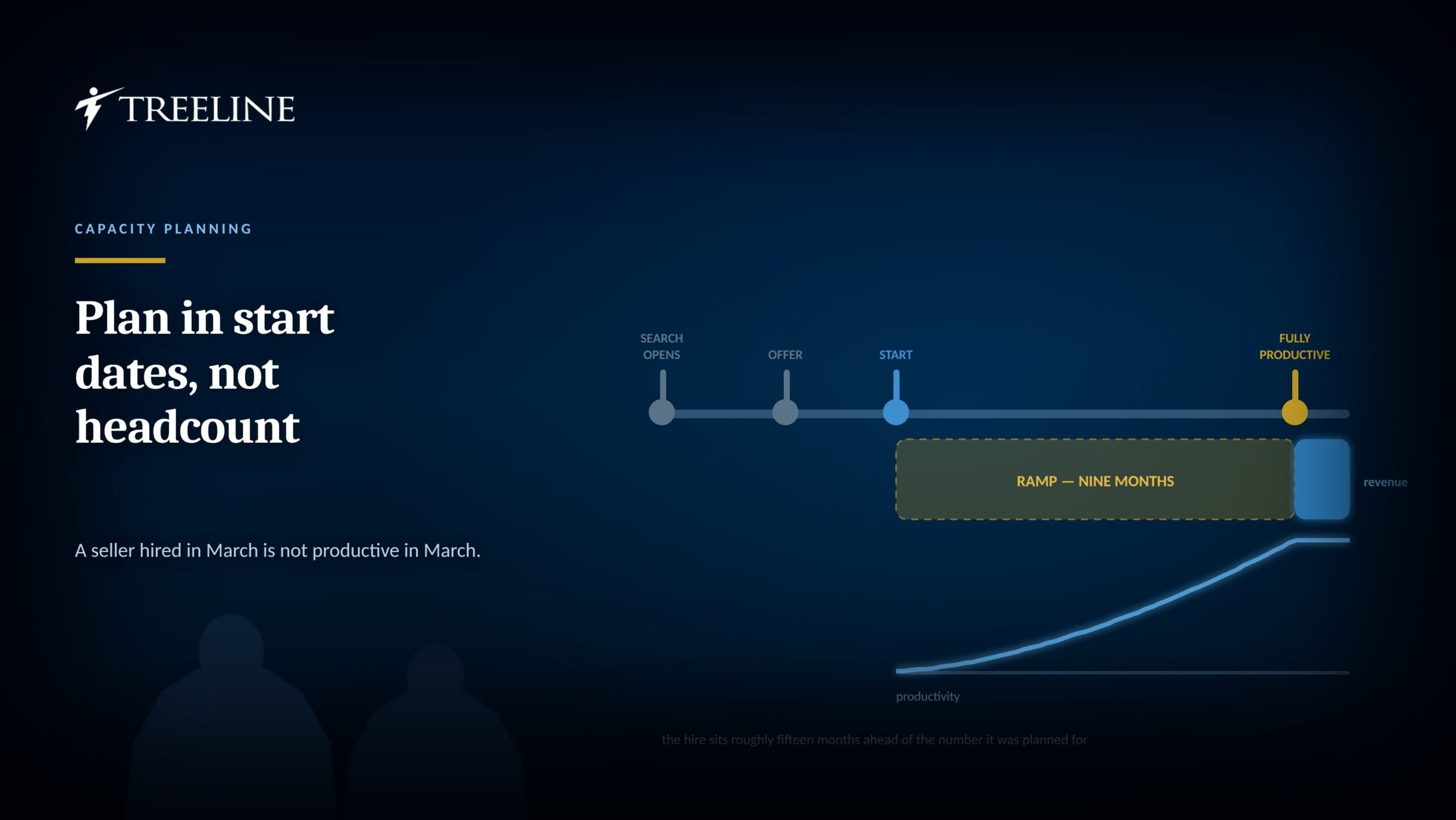
Quality candidates typically reach productivity in 3-4 months for a VP of Sales, 2-3 months for a Director of Sales, 4-6 weeks for an Account Executive, and 2-4 weeks for a Sales Development Rep. Lower quality candidates might take twice as long or never reach full productivity. If a VP reaches productivity in 3 months versus 6 months, you’ve created 3 months of value (potentially $300,000+ in revenue impact).
Cultural Integration: Do They Actually Fit Your Organization
A third quality metric is cultural integration, do people feel like they fit and work well with their teams? This is assessed through team feedback, retention of the surrounding team, culture alignment, and collaborative effectiveness. Contingency search firms improve this metric through thorough fit assessment, placing capable people who will integrate well into your specific organization.
Career Development and Long-Term Growth
People who see growth opportunity stay longer and perform better, which is particularly important for ambitious sales talent. Contingency search firms assess whether candidates will see growth opportunity in your organization, understanding your career trajectory and growth potential. This growth-oriented matching improves retention dramatically, so contingency search firm placements often stay significantly longer than job board hires.
Ramp Speed and Early Productivity
Contingency search firm placements typically reach full productivity faster because they already have relevant skills, understand sales methodology quickly, integrate with the team faster, and understand the market context. Quality placements often reach productivity 25-50% faster than lower-quality placements, and that productivity differential compounds into substantial revenue impact over time.
Real-World Impact: What Actually Changes When You Focus on Quality
When organizations start working with contingency search firms focused on candidate quality, several measurable things change. Your hiring conversations improve and become more strategic, hiring managers shift from “do they seem capable?” to “will they actually work out in our specific situation?” Your team’s confidence in hiring decisions increases substantially, when hires consistently work out, hiring stops feeling like a crapshoot. Your retention improves noticeably and compounds over time, organizations typically see 15-25% improvement in retention metrics when they shift to quality-focused sourcing. Your culture stays strong and doesn’t drift, each hire reinforces your culture rather than diluting it. Your recruiting burden decreases long-term despite the initial investment, because you’re not recruiting constant replacements for failed hires. Your team morale and engagement improve measurably, working with great people is energizing while working with bad fits is draining.
How to Evaluate Contingency Search Firms on Quality Focus
Not all contingency search firms prioritize quality equally. Here’s how to evaluate their quality focus. Ask about their vetting process: do they conduct reference checks, how many, and do they talk to actual previous managers or just prepared references? Do they assess motivation and evaluate fit, and can they describe their frameworks? Strong firms can describe their vetting process in detail because they’ve refined and measured it. Ask specifically about their quality metrics and success rates: 90-day success rate, 1-year tenure rate, and what percentage of placements exceed expectations. If a firm can’t answer with specific numbers, they’re probably not prioritizing quality. Ask directly about failed placements and how they handle failures: every firm has some placement failures, so quality firms might have 5-15% failure rates, and firms claiming near-zero failures are either exaggerating or only accepting easy placements. Quality-focused firms investigate failures and improve their process. Ask about their sourcing approach and relationship depth: quality-focused firms tend to source primarily from existing relationships because that enables better vetting and quality prediction. Check their references and past client experience: repeat clients are the strongest signal of quality focus.
Conclusion: Why Quality Matters More Than Speed or Cost
Sales hiring decisions are often made on speed or cost, but the most important metric is quality. Quality determines whether the hire actually works out, the business outcome impact, whether you’re paying for hiring twice, and whether your team stays intact. Contingency search firms improve quality through aligned incentives (they’re financially on the hook if placements fail), thorough vetting (they assess what traditional recruiting misses), motivation assessment (they identify misaligned expectations upfront), reference verification (they confirm claims rather than accepting them at face value), fit evaluation (they place people who will integrate successfully), and market expertise (they understand your specific context). Quality-focused contingency search firms report 85-95% 90-day success rates versus 60-75% for job boards, 85-95% 1-year tenure rates, 75-90% of placements exceeding expectations, and 5-15% failure rates versus 25-35% for traditional recruiting. A failed VP hire costs $300,000-$500,000+, while a successful hire generates $500,000+ in annual revenue impact. For sales organizations serious about building strong teams and achieving business outcomes, quality-focused contingency search firms have become essential infrastructure, because in sales hiring, quality isn’t a luxury, it’s the difference between business success and mediocre results. Discover how Treeline improves candidate quality through specialized contingency search expertise.
Questions People Actually Ask About Candidate Quality and Contingency Search Firms
How do contingency search firms actually ensure better quality than what we’d get from job board candidates?
They use fundamentally different sourcing and vetting approaches. Instead of posting jobs and screening applications from hundreds of candidates, they source from relationships and networks where they have context about candidate quality, they know the people they’re calling and understand their strengths and limitations. Instead of brief phone screens conducted by HR, they conduct thorough reference checks with actual previous managers, asking behavioral questions designed to reveal reality. Instead of generic interviews where candidates give polished answers, they assess motivation, fit, and sales-specific capability through deeper conversations. These process differences result in candidates being more thoroughly vetted before they ever reach your organization, so you’re evaluating pre-qualified people rather than screening dozens of applications to find a few qualified candidates.
If contingency search firms only get paid on placement, doesn’t that incentivize them to place people quickly rather than ensure quality?
Actually the opposite. They get paid on successful placement, which usually includes 30-day guarantees. If placements fail, they have to provide replacements at no cost. This incentivizes them to place people who will actually succeed, not just people who will accept offers. They’re financially motivated to ensure quality because bad placements cost them. This is fundamentally different from traditional recruiting where people get paid regardless of outcome.
How much does improved hiring quality actually matter financially?
Significantly. A failed hire costs $150,000-$300,000+ in recruiting restart, productivity loss, and team disruption. A successful hire generates substantial revenue and cultural value. Consider a VP of Sales hire: a failed hire is $500,000 total cost while a successful hire generates $500,000+ revenue impact annually. If contingency search firms reduce your failure rate from 25% to 5% across 10 annual hires, you save $150,000-$450,000 from reduced failures alone, plus additional impact from faster ramp, longer retention, better performance, improved team morale, and culture reinforcement. When you factor in the contingency search firm fee (typically 25% of base salary), the recruiting fee often pays for itself in reduced failure costs within the first hire.
What’s the difference between “quality” and just “hiring people who work out”?
Quality encompasses multiple dimensions: capability (can they do the job?), motivation (will they want to stay?), fit (will they integrate with the team?), and growth potential (will they develop over time?). “Hiring people who work out” might mean just avoiding obvious failures. Quality means actively selecting people likely to excel, integrate, and contribute long-term.
How do I know if a contingency search firm is actually focused on quality versus just volume?
Ask about their metrics: 90-day success rate, 1-year tenure, performance ratings of placements. Ask about their vetting process in detail. Ask about failed placements and how they handle them. Talk to past clients about placement quality. Quality-focused firms have data to back up quality claims. Volume-focused firms tend to be vague about outcomes.
“@context”: “https://schema.org”,
“@type”: “FAQPage”,
“mainEntity”: [
{
“@type”: “Question”,
“name”: “How do contingency search firms actually ensure better quality than what we’d get from job board candidates?”,
“acceptedAnswer”: {
“@type”: “Answer”,
“text”: “They use different sourcing and vetting approaches. Instead of posting jobs and screening applications, they source from relationships and networks where they have context about candidate quality. Instead of brief phone screens, they conduct thorough reference checks with actual previous managers. Instead of generic interviews, they assess motivation, fit, and sales-specific capability deeply. These process differences result in candidates being more thoroughly vetted before reaching your organization. You evaluate pre-qualified people, not screen dozens to find qualified candidates.”
}
},
{
“@type”: “Question”,
“name”: “If contingency search firms only get paid on placement, doesn’t that incentivize them to place people quickly rather than ensure quality?”,
“acceptedAnswer”: {
“@type”: “Answer”,
“text”: “Actually opposite. They get paid on successful placement, usually including 30-day guarantees. If placements fail, they provide replacements at no cost. This incentivizes placing people who will actually succeed, not just accept offers. They’re financially motivated to ensure quality because bad placements cost them. This fundamentally differs from traditional recruiting where people get paid regardless of outcome.”
}
},
{
“@type”: “Question”,
“name”: “How much does improved hiring quality actually matter financially?”,
“acceptedAnswer”: {
“@type”: “Answer”,
“text”: “Significantly. A failed hire costs $150,000-$300,000+ in recruiting restart, productivity loss, and team disruption. A successful hire generates substantial revenue and cultural value. If contingency search firms reduce failure rate from 25% to 5%, you save $100,000-$200,000+ annually across 10 hires. Additional impact comes from faster ramping, better performance, and longer retention of quality hires.”
}
},
{
“@type”: “Question”,
“name”: “What’s the difference between ‘quality’ and just ‘hiring people who work out’?”,
“acceptedAnswer”: {
“@type”: “Answer”,
“text”: “Quality encompasses multiple dimensions: capability (can they do the job?), motivation (will they want to stay?), fit (will they integrate with team?), and growth potential (will they develop over time?). Hiring people who work out might mean avoiding obvious failures. Quality means actively selecting people likely to excel, integrate, and contribute long-term.”
}
},
{
“@type”: “Question”,
“name”: “How do I know if a contingency search firm is actually focused on quality versus just volume?”,
“acceptedAnswer”: {
“@type”: “Answer”,
“text”: “Ask about their metrics: 90-day success rate, 1-year tenure, performance ratings. Ask about vetting process in detail. Ask about failed placements and handling. Talk to past clients about placement quality. Quality-focused firms have data backing quality claims. Volume-focused firms tend to be vague about outcomes.”
}
}
] }
Share This Story, Choose Your Platform!
Related Posts


What our happy clients are saying
Treeline Inc. provided us with the most candidates that aligned with our needs and were of the highest quality.

Dr. Jeffrey Klein Head of North America Sales, Satchel Pulse
Treeline Inc.’s collaborative, flexible, and communicative approach resulted in a smooth partnership. Beyond their recruitment expertise, their unique sourcing model was efficient and effective.

Sera Holt Director of Operations, LNS Research
Their professionalism was outstanding. Treeline Inc. was extremely thorough and ensured that we were on the same page before they started looking for candidates. They listened to us and did a great job working with the candidate to close out the process.

Cate Grant AVP Customer Success, Nasdaq
Thanks to Treeline Inc.’s intricate and thorough screening process, the company is able to hire six high-quality candidates that fit perfectly in the company’s culture. The team is highly receptive to concerns, and internal stakeholders are impressed with their unique recruitment abilities.

Anna McKean Sales Recruiter, Insider Intelligence
Treeline Inc. has been qualified individuals throughout a five-year-long engagement. They’ve made numerous placements of talented and qualified individuals for our business.

Michele St Laurent VP of HR, The Institute for Applied Network Security

Let Us Help You Source the Sales Talent You Need
Whether you’re building a team or replacing a key role, our Candidate Sourcing Platform provides a fast, flexible, and employer-focused solution.
Tell us more about your business and how we can help.
Treeline Inc.
Your Award-Winning Sales Recruitment Partner
15 Lincoln Street, Suite 314, Wakefield, MA 01880