Understanding the Need to Benchmark Sales Recruiting Firms
Choosing the right sales recruiting firm can have lasting repercussions for companies focused on accelerating their revenue and market footprint. With a crowded market that includes the nation’s top sales recruiting firms and specialized sales recruiting companies vying for attention, understanding what differentiates a truly effective partner is crucial. Employers are increasingly looking to base their selection on measurable outcomes and strategic alignment, not just slick marketing.
What does benchmarking a sales recruiting firm involve? At its essence, benchmarking is the process of comparing the performance, methodologies, and results of potential or incumbent recruitment partners against clear industry standards and business specific objectives. Done well, this empowers employers to make decisions rooted in evidence, optimizing their investment and mitigating risk.
Demand for data driven hiring partners has soared in recent years. According to a 2026 sales recruiting news update in SHRM, U.S. companies reported a marked increase in revenue attributed to targeted recruiting and streamlined integrations with hiring partners. As competition for skilled sales talent intensifies, having a tangible benchmarking process isn’t just “nice to have”, it’s non-negotiable.
Employers now seek more than just a vendor: they require a partner who understands unique business challenges, works efficiently, and delivers top performers who stay and thrive. This raises the question many business leaders are asking: How can organizations fairly and effectively evaluate, compare, and choose their sales recruiting firm? What metrics truly matter, and how can employers interpret them for maximum business impact?
In this article, we explore the key elements of benchmarking sales recruiting firm performance, including essential KPIs, emerging strategies for 2026, red flags to watch for, and actionable best practices. Whether your goal is to overhaul your sales talent acquisition strategy or fine tune existing partnerships, a structured approach to assessment will boost your hiring results and bottom line.
Ready to discover how your next sales recruiting partnership can move the needle for your business? Book an introductory meeting to discuss your sales hiring needs here.
Core Performance Metrics for Benchmarking a Sales Recruiting Firm
Establishing a set of metrics for evaluating sales recruiting companies takes the guesswork out of a crucial business process. Today’s best sales recruiting United States firms encourage transparency, often sharing detailed reports to keep clients informed at every step.
Time to Fill
Arguably the most practical benchmark, time to fill is the average duration (in days) from when a job requisition is opened to when an offer is accepted. For specialized sales roles, industry averages fluctuate between 35-49 days, according to LinkedIn’s 2026 Global Recruitment Trends. However, some elite sales recruiting firms boast delivery of pre-vetted candidates within three business days, dramatically reducing downtime and lost revenue.
Quality of Hire
It’s no longer enough to simply present candidates who check boxes on a resume. Measuring quality of hire can include tracking new hire performance, sales pipeline impact, and retention rates over 12–24 months. Employers should ask firms to provide case studies or data showing how their placements performed after onboarding, including quota attainment and early attrition rates.
Candidate Pipeline Strength
The depth and health of a recruiter’s network is a differentiator. Top sales recruiting companies often leverage proprietary databases, some exceeding 200,000 qualified professionals, offering access beyond traditional job boards or passive networks. Metrics here include the number of qualified candidates submitted, diversity representation, and geographic reach.
Offer Acceptance Rate
A high offer acceptance rate signals effective matching and candidate engagement. Leading sales recruiting firms in the United States often report rates over 90%, indicating strong relationships and honed selection processes. For employers, a low rate can signal misalignment with your brand, unclear role requirements, or a recruiter not fully advocating on your behalf.
Client Satisfaction Rate & NPS
Surveys, reviews, references, and Net Promoter Scores (NPS) help assess relationship health. Nationally recognized sales recruiting companies frequently showcase client satisfaction rates above 95%, backed up by testimonials and repeat business.
Diversity Hiring Outcomes
Inclusion isn’t just a buzzword, effective recruiting partners help employers build diverse teams, improving team performance and workplace culture. Track metrics such as representation of women, underrepresented minorities, or veterans across presented and placed candidates.
Employers should request detailed reporting on these KPIs from all recruitment partners and compare the data to spot both strengths and weaknesses in current or potential collaborations. As sales recruiting news sites often emphasize, numbers are only part of the story, context, communication, and adaptability remain essential for effective benchmarking.
Looking to benchmark your current recruiting partner? Midway through this article, consider scheduling a strategy session with industry experts and explore how evidence based recruiting can transform your sales organization. Book an introductory meeting here.
Essential Qualitative Factors: Beyond the Numbers
While quantitative metrics are invaluable in the benchmarking process, qualitative factors play a pivotal role in determining long term recruiting success. Elite sales recruiting firms blend data with insight, understanding that the art of recruiting sits alongside its science. Employers should weigh these qualitative elements as they assess potential or ongoing partnerships:
Sales Role Specialization
A recruiter’s specialization directly influences their effectiveness. Generalist firms may lack nuanced understanding of what makes a top performing SaaS account executive or enterprise sales manager tick. The nation’s top sales recruiting firms often invest heavily in market research, networking at industry specific events, and ongoing training for their recruiters. Their candidates are typically better tailored to the unique needs and culture of sales driven organizations.
Candidate Experience and Communication
How your recruiter interacts with candidates can affect your reputation as an employer. Seamless, respectful candidate engagement ensures the best talent isn’t discouraged by disorganization or lack of follow up. Employers should monitor feedback from placed and even rejected candidates for insights into recruiter professionalism.
Recruitment Technology and Tools
World class sales recruiting companies use advanced tools, such as AI driven sourcing platforms, resume transparency systems, and automated communication workflows. These tools accelerate the hiring process, enhance candidate insights, and enable smart, data rich decisions. For instance, some firms now provide interactive resume views or dashboards that bring transparency to the shortlisting process.
Assessment and Cultural Fit Evaluation
The highest quality sales hires excel because they align not just on experience but on company culture and values. Strong recruiting firms implement rigorous pre screening interviews, role specific assessments, and behavioral profiling. Employers should ask how the firm approaches cultural fit, what tools they use, and if they’re able to give detailed feedback on why a candidate is recommended.
Flexibility and Engagement Models
Sales recruiting strategies differ across industries and companies. Successful firms adapt their approach, offering contingency, retained, or even membership based models, to meet client needs. Employers must consider the degree to which a recruiting partner is willing to tailor their services, contract terms, and support as businesses evolve.
Transparency and Proactive Communication
Frequent updates, honest timelines, and upfront discussions about challenges set industry leaders apart. The best sales recruiting United States firms operate as collaborators, not intermediaries. Employers should expect structured, routine check ins and clear reporting that aligns recruitment progress with business goals.
Industry Reputation and Awards
Firm recognition in reputable national surveys, industry awards, or direct recommendations shouldn’t be overlooked. These point to consistency, thought leadership, and an established track record, critical for employers weighing many recruitment partners.
Bringing these qualitative factors into your benchmarking process requires regular reviews, detailed feedback analysis, and structured interviews with key stakeholders (both internal and external). Combining these “soft” measures with hard data leads to a more predictable and positive sales hiring outcome.
Comparative Analysis: Benchmarking Against the Nation’s Top Sales Recruiting Firms
To truly understand a recruiting partner’s value, employers should compare them not just to past vendors or internal teams but to industry leaders, those routinely named among the nation’s top sales recruiting firms. This process provides valuable context and helps set expectations rooted in best practices.
Start by gathering public information, from firm websites, third party reviews, and reputable industry news sources like Forbes’ Best Recruiting and Temporary Staffing Firms 2026 or Inc. Best Workplaces 2026. These rankings consider a mix of qualitative and quantitative factors, including client testimonials, placement success rates, commitment to diversity, and operational scale.
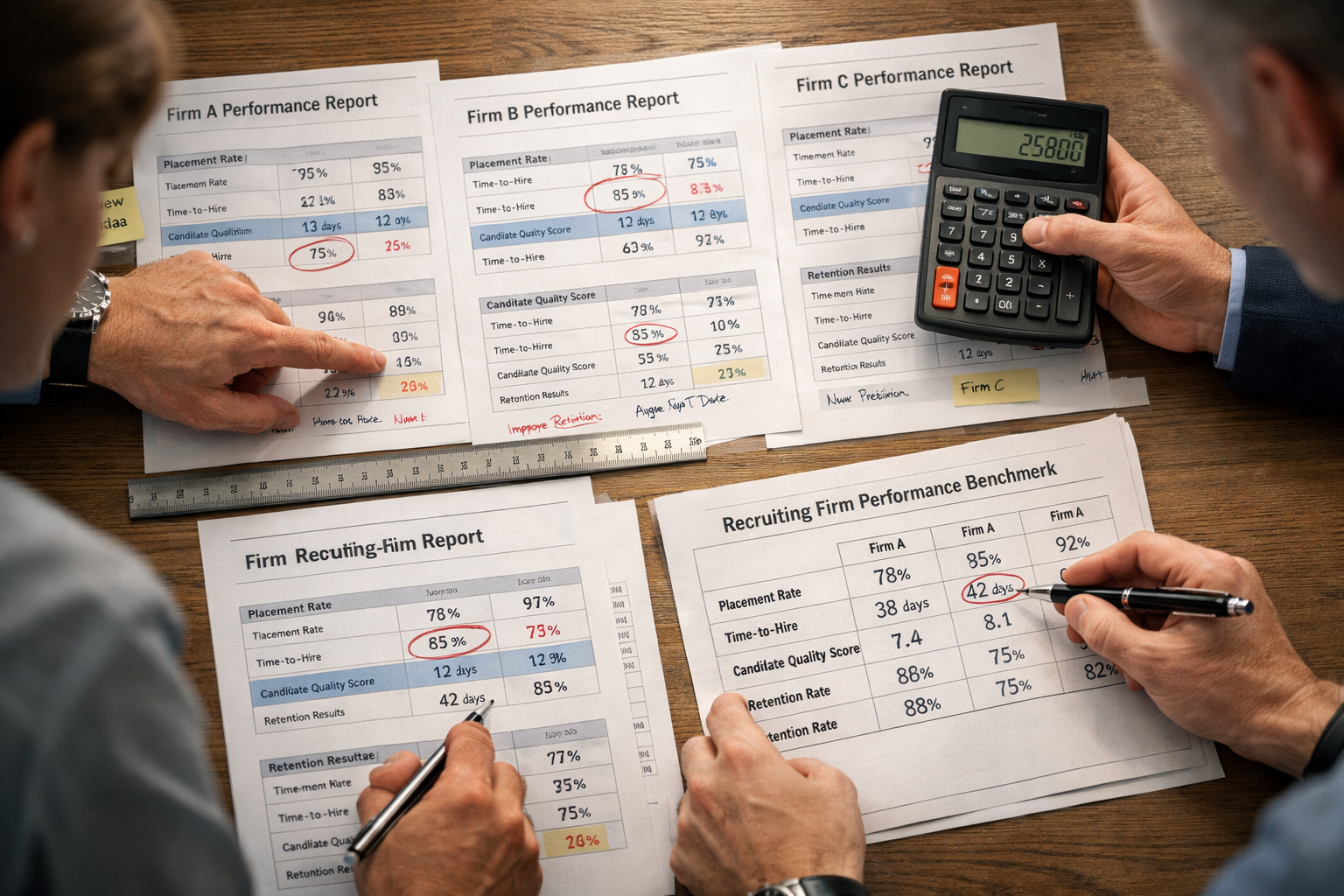
Employers can enhance the benchmarking process by conducting a side by side comparison across categories such as:
- Speed of candidate presentation
- Depth of candidate pool
- Specialization in relevant verticals (e.g., B2B SaaS, healthcare)
- Placement and retention rates for similar positions or industries
- Technology stack and candidate assessment processes
- Awards and peer recognition
To visualize performance, many businesses use comparison tables or dashboards that rank firms according to each key metric, often using weighted importance scores aligned with organizational goals.
For example, Company X found that while both Firm A and Firm B claimed to specialize in enterprise B2B sales, only Firm A could provide references and data that demonstrated successful placements within their specific industry and territory, with a 98% client satisfaction rate versus 85% for Firm B. This kind of concrete, fair comparison enables leaders to make sound, justified decisions.
According to Harvard Business Review, leading employers regularly review their recruiting partnerships at least annually, benchmarking not only on the past year’s results but against the evolving standards of the nation’s top sales recruiting firms.
Regular competitive benchmarking doesn’t stop after an initial engagement. Continuous assessment allows employers to foster accountability, ensure continuous improvement, and renegotiate contracts as needed to secure ongoing value. This approach also helps respond proactively to shifts in market demand, keeping businesses ahead of talent shortages or emerging competitive threats.
Red Flags and Pitfalls: What to Watch for When Evaluating Sales Recruiting Companies
Benchmarking reveals not only areas for celebration but also potential trouble spots. Employers must remain vigilant for red flags during, and even before, engagement with sales recruiting companies.
Lack of Transparency
If a firm is unwilling or slow to share performance data, such as placement rates, retention statistics, or client reviews, this may suggest poor results or organizational issues. Transparency is foundational for a trust based relationship.
One Size Fits All Approaches
Be wary of firms that appear to apply the same methods and processes across clients and industries. Each organization’s sales environment is unique, so recruiting strategies and evaluation criteria must be adaptable and tailored.
Low Volume of Qualified Candidates
A consistently small slate of candidates, especially after an extended search window, could indicate either a shallow network or lack of expertise in your vertical. This risk climbs when a firm over promises on available talent pools.
Poor Responsiveness
Response times matter, a lack of timely updates, delayed feedback, or unreturned calls should prompt concern. This can affect candidate enthusiasm and damage the employer brand in tight labor markets.
Limited Industry Knowledge
Sales roles change rapidly, especially in growing sectors like SaaS, tech, or healthcare. Recruiters out of step with market trends or unable to articulate the nuances of your sector may struggle to deliver candidates who can ramp up quickly and produce results.
Failure to Assess for Cultural or Strategic Fit
Firms focused solely on skillset (excluding soft skills, motivation, and alignment with business values) can inadvertently introduce mis hires who churn early or underperform, despite a strong resume.
High Replacement or Refund Rates
Frequent replacements or refunded search fees highlight misalignment on role requirements, poor vetting, or corners being cut during search and screening. While every recruiter faces the occasional mismatch, sustained issues here require investigation.
Employers should keep detailed records of recruiter performance, documenting all instances of dissatisfaction or friction, alongside successes. Regular scorecards, reviews, or even brief “lessons learned” meetings post hire can reveal patterns worth acting on.
Those ready to make the leap to a relationship that meets higher standards may find it helpful to initiate a detailed, objective discussion with a new recruiting partner. Book an introductory session to explore your company’s unique challenges and goals here.
Best Practices for Ongoing Benchmarking and Future Success
Sustained improvement in sales recruiting outcomes depends on a structured, repeatable approach to benchmarking and partnership management. The following best practices have emerged from the most effective organizations and recruiting leaders:
Set Clear, Shared Goals at the Outset
Strong recruiting partnerships begin with mutual understanding. Define what a successful hire looks like, not just in skills, but in ramp up time, culture fit, and impact on team performance.
Request Regular, Custom Reporting
Don’t rely on generic summary emails. Insist on detailed, periodic reports covering all agreed metrics, including time to fill, quality, and candidate feedback. The nation’s top sales recruiting firms are equipped to provide this data.
Include Stakeholder Feedback
Solicit structured feedback from hiring managers and candidates at set intervals, both during the hiring process and after onboarding. This provides a “360 degree” view and helps surface insights that numbers alone can’t.
Hold Periodic Review Meetings
Schedule formal or informal check-ins quarterly or post engagement to review successes, challenges, and alignment with market trends. Use these as an opportunity to recalibrate expectations, address potential issues, and celebrate achievements.
Incorporate Market Intelligence and Sales Recruiting News
Keep abreast of changing compensation trends, role requirements, and competitor activities. Reputable recruiting partners should be proactive about sharing this intelligence, helping you stay competitive in the battle for top talent.
Test Before Making Long Term Commitments
If considering a new firm, begin with a pilot or single role engagement. Compare outcomes on your chosen metrics before expanding the partnership.
Leverage Multiple Partners (When Appropriate)
While some employers benefit from exclusive arrangements, others find value in periodically benchmarking across several recruiting firms. Varying engagement models and recruiter pools allows for broader learnings and fallback options when speed is critical.
Adapt Benchmarking Criteria Over Time
As your business, industry, or competitive set shifts, so should your benchmarking model. Periodically revisit which KPIs matter most for your strategic priorities.
Embrace Technology
With advances in recruiting analytics and digital platforms, real time benchmarking is possible. Partner with firms who offer dashboard access, as well as firms that continue to invest in next generation tools to drive better outcomes.
Forward thinking organizations see every engagement and hire as an opportunity to refine their process. Regular, structured benchmarking ensures sales talent acquisition doesn’t grow stale or reactive, but remains an agile engine for business growth.
Frequently Asked Questions
What is the most important metric when evaluating a sales recruiting firm?
The most important metric depends on your business goals. For many employers, time to fill is critical, especially in fast moving markets. Others prioritize quality of hire, measured by new hire performance and retention. The best approach is to combine multiple metrics, including time to fill, quality of hire, offer acceptance rate, and candidate diversity, to gain a well rounded picture.
How often should employers benchmark their recruiting partners?
Annual reviews are a minimum, but many companies benefit from quarterly check-ins or post engagement debriefs, especially after high volume hiring sprees or challenging searches. Regular benchmarking ensures continued alignment with business objectives and market changes.
Why does candidate experience matter in sales recruiting?
Candidate experience is vital because it directly affects the employer brand and determines whether top tier talent will accept an offer, or refer peers in the future. Poor candidate experience can reduce offer acceptance rates, while a positive experience boosts your reputation in talent communities.
Are industry awards good indicators of sales recruiting firm quality?
Industry awards, like those from Forbes or Inc., typically recognize firms with proven performance, innovation, and client satisfaction. While not the only factor to consider, such recognition can indicate consistent success and reinforce a firm’s standing among the nation’s top sales recruiting firms.
How do I get started with benchmarking a new recruiting partner?
Begin by defining your hiring goals and key success metrics. Request data and references from prospective partners and compare using a scorecard. It can be helpful to start with a pilot role or smaller search before committing to a long term agreement, ensuring the firm aligns with your business needs and culture.
Share This Story, Choose Your Platform!
Related Posts

What our happy clients are saying
Treeline Inc. provided us with the most candidates that aligned with our needs and were of the highest quality.

Dr. Jeffrey Klein Head of North America Sales, Satchel Pulse
Treeline Inc.’s collaborative, flexible, and communicative approach resulted in a smooth partnership. Beyond their recruitment expertise, their unique sourcing model was efficient and effective.

Sera Holt Director of Operations, LNS Research
Their professionalism was outstanding. Treeline Inc. was extremely thorough and ensured that we were on the same page before they started looking for candidates. They listened to us and did a great job working with the candidate to close out the process.

Cate Grant AVP Customer Success, Nasdaq
Thanks to Treeline Inc.’s intricate and thorough screening process, the company is able to hire six high-quality candidates that fit perfectly in the company’s culture. The team is highly receptive to concerns, and internal stakeholders are impressed with their unique recruitment abilities.

Anna McKean Sales Recruiter, Insider Intelligence
Treeline Inc. has been qualified individuals throughout a five-year-long engagement. They’ve made numerous placements of talented and qualified individuals for our business.

Michele St Laurent VP of HR, The Institute for Applied Network Security

Let Us Help You Source the Sales Talent You Need
Whether you’re building a team or replacing a key role, our Candidate Sourcing Platform provides a fast, flexible, and employer-focused solution.
Tell us more about your business and how we can help.
Treeline Inc.
Your Award-Winning Sales Recruitment Partner
15 Lincoln Street, Suite 314, Wakefield, MA 01880