Rethinking Your Hiring Process: The Rise of Recruiter AI in Sales Talent Acquisition
As organizations grapple with evolving sales targets and volatile market demands, the way employers hire sales talent is under profound transformation. The emergence of recruiter AI is at the forefront, offering a shift from traditional, time-consuming hiring methods to intelligent, data-driven solutions that optimize finding and engaging top-tier candidates. For employers and sales recruiters focused on building high-performing teams, understanding the practical impact and strategies behind AI powered recruiting and artificial intelligence recruitment is no longer a distant objective, it is a current necessity.
Recruiter AI systems are not mere resume screeners; they are sophisticated platforms designed to evaluate not only candidate experience and credentials but also cultural fit, sales competencies, and potential for advancement. By embracing artificial intelligence hiring solutions, companies accelerate their processes, reduce bias, and improve their final selection, all while freeing internal HR resources for higher-level talent initiatives.
Sales recruiters, HR leaders, and hiring managers who want to remain competitive are quickly discovering that best ai recruiting tools are critical for faster, smarter, and more reliable placements. Recent research from LinkedIn’s Future of Recruiting 2025 report reveals that 76% of hiring professionals believe AI will play a critical role in identifying and securing talent, particularly for specialized sales and executive functions.
If your organization is exploring recruiter ai, now is the time to rethink your sales recruiting approach. Book an introductory meeting to discuss how your recruitment strategy can be elevated with AI-driven tools and methodologies: Schedule your discovery session.
Understanding Recruiter AI: How It Works and What Sets It Apart in Sales Recruitment
When people mention recruiter AI, they reference a suite of processes and platforms that leverage artificial intelligence to manage, analyze, and enhance every stage of the talent acquisition lifecycle. Unlike narrowly focused applicant tracking systems (ATS) that simply collect resumes and automate emails, today’s ai powered recruiting technology blends advanced algorithms, machine learning, natural language processing, and even predictive analytics.
At its core, recruiter AI analyzes large sets of resume data, candidate communications, and role requirements to highlight matches that fit both the technical needs and softer team dynamics of modern sales organizations. These AI systems continuously learn from hiring patterns: each successful placement, candidate feedback, and performance review helps refine subsequent rankings and recommendations.
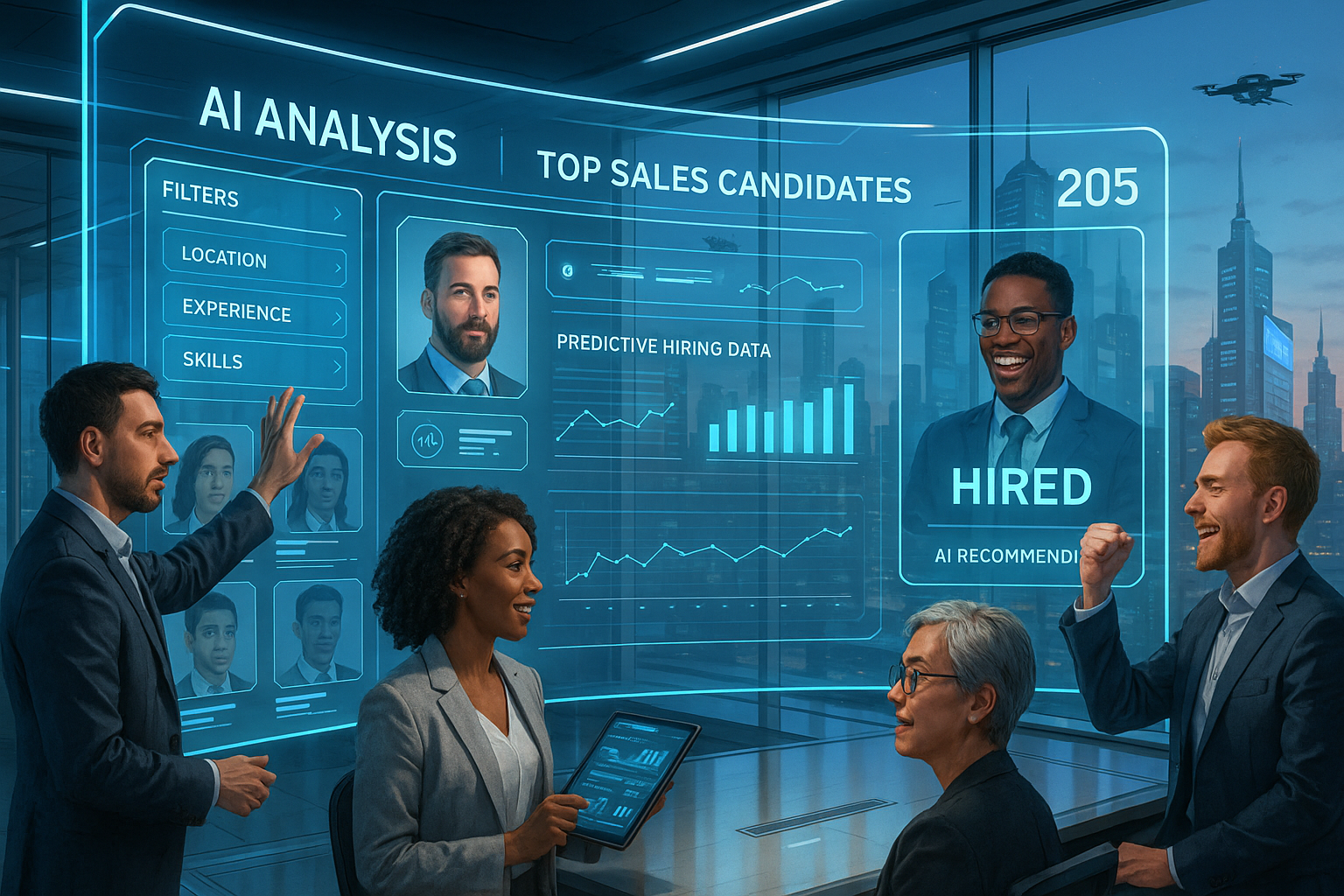
For example, an AI hiring software platform might integrate with your company’s job portal, review hundreds of candidate resumes in minutes, and flag those who demonstrate success in similar sales roles (like SaaS business development or enterprise account management). Simultaneously, it can analyze the nuances within job descriptions, such as a preference for consultative sellers or candidates coming from startup environments, then tailor outreach and screening questions accordingly.
What distinguishes recruiter AI is its capacity to process data points traditional methods would overlook. It can mine LinkedIn profiles, digital portfolios, and even social media presence for signals of communication strength or leadership attributes. In sales, where personality and persistence are often as valuable as experience, this ability to read “between the lines” gives employers a crucial edge.
Another defining feature is real time analytics and insight. AI-powered dashboards can tell HR teams which sourcing channels yield the highest-quality candidates, when market availability for account executives or VPs peaks, and where bottlenecks occur. This transforms recruiting into a process that is not only data-informed but also continuously optimized for better results.
By using recruiter AI to inform early candidate conversations, structure technical and behavioral interviews, and even guide compensation benchmarking, employers find themselves better equipped to make confident, rapid hiring decisions. Notably, companies experimenting with artificial intelligence hiring saw a 30% reduction in time-to-fill for sales positions compared to those relying solely on manual review, as reported by HBR in early 2025.
Accelerating Sales Hiring with AI Powered Recruiting: Case Examples and Key Advantages
Sales hiring often demands a blend of urgency, precision, and cultural alignment, mistakes can be costly, resulting not only in lost revenue but also a disruptive effect on morale and productivity. AI powered recruiting tools address these challenges in several direct ways, offering tangible and quantifiable benefits for employers determined to tighten up their sales recruitment process.
Case Example: Streamlining Enterprise Sales Placements
Consider the journey of a B2B tech company seeking to build an enterprise software sales team across multiple regions. The traditional approach, reviewing hundreds of resumes, conducting lengthy phone screens, and coordinating dozens of panel interviews, would often stretch over 10 to 12 weeks. Implementing a recruiter AI solution changed the equation: The system quickly parsed relevant skills (like Salesforce CRM and complex deal negotiation), prioritized applicants with strong vertical expertise, and scheduled interviews automatically for those meeting the pre-set benchmarks. As a result, the firm reduced its hiring cycle by nearly half, onboarding top candidates in under five weeks.
Key Advantages for Employers:
- Speed and Scalability: Recruiter AI reviews thousands of profiles simultaneously and scores them based on customized hiring criteria, allowing organizations to scale their talent search quickly during periods of rapid growth or seasonal spikes.
- Unconscious Bias Reduction: AI models can be trained to mask candidate demographic data during initial screening, shrinking bias that might otherwise sneak in through name, age, or educational background, critical for diversity-focused hiring mandates.
- Data-Informed Decisions: Rather than relying on instinct or hurried decisions, employers gain access to dashboards that reveal which candidate sources, profiles, and outreach tactics deliver the highest ROI.
- Objective Assessments: Many ai hiring software tools include digital assessments, such as simulated sales calls or behavioral games, tailored to measure both skills and culture fit.
In a rapidly shifting hiring market, these technologies provide more than just speed; they enable a deeper understanding of what works and why. A study by Gartner published in 2025 showed that companies adopting best ai recruiting tools experienced a 22% increase in candidate quality and a significant uptick in sales revenue per new hire within the first year.
Employers seeking to hire for complex, high-impact sales roles, and avoid costly mis-hires, are increasingly turning to recruiter AI for a blend of efficiency, clarity, and confidence not possible with manual processes alone.
To see AI hiring software and intelligent sales headhunting in action, explore executive sales recruiters and discover how these innovations can reshape your approach.
Integrating Artificial Intelligence Hiring Software into Your Recruiting Workflow
Introducing artificial intelligence hiring software into an established hiring process can seem daunting to employers, especially when legacy systems, team workflows, and compliance requirements are at play. However, integrating recruiter ai solutions is far more achievable, and advantageous, than most HR leaders imagine.
The integration process typically starts with an assessment of existing recruiting workflows, identifying bottlenecks and repetitive, manual steps that would benefit most from automation or predictive analytics. For sales recruiters and hiring managers, this often means the initial sourcing and screening stages, followed by candidate engagement, interview scheduling, and assessment scoring.
Step 1: Audit Your Current Process
Begin by mapping your recruitment funnel from role posting to final offer acceptance. Where are delays most frequent? What steps are most subjective? Is your team relying on manual spreadsheet tracking, or are there already digital solutions in place? This detailed review will clarify where recruiter AI can add immediate value.
Step 2: Set Clear Objectives
AI platforms excel when objectives and parameters are explicit: Define key sales competencies, must-have background experiences, and cultural values you want the tool to prioritize. For example, an employer targeting enterprise SaaS sales professionals might input criteria such as quota attainment records, experience with long sales cycles, and proficiency with CRM tools.
Step 3: Choose the Right Recruitment AI Software
Evaluate ai powered recruiting tools based on their integration capabilities, ease of use, compliance with data privacy regulations, and track record within your industry. Solutions designed specifically for sales talent acquisition often come with libraries of interview questions, skills assessments, and personality profiling aligned to common sales roles.
Step 4: Train Your Team
Change management is crucial: Schedule training so recruiters and hiring managers understand the purpose and functionality of the new software. AI is not designed to replace human judgment but to inform and expedite it. By involving your team early, you promote trust and a collaborative attitude toward new processes.
Step 5: Continuous Feedback and Tuning
Once live, AI hiring software will collect data on process outcomes and candidate fit. Regularly review this data using internal reporting tools or dashboards to ensure the software’s suggestions align with your sales organization’s end goals. Adjust parameters as you learn and evolve.
Real-World Example: Implementing AI for SDR Recruitment
A national SaaS provider needed to hire 25 new Sales Development Representatives (SDRs) in one quarter but was overwhelmed with applicant volume. By deploying recruiter ai tools, initial screening time dropped from weeks to days, while average candidate quality improved, measured both by eventual quotas hit and retention at the 90-day mark.
Employers can complement these advanced hiring technologies with service partners specializing in sales staffing and candidate sourcing. If you want tailored strategies for embracing recruiter AI, consider learning more about sales staffing and what it takes to future-proof your hiring approach.
Book an introductory meeting for a step-by-step walkthrough on integrating AI-powered recruiting into your existing HR stack: Reserve your session now.
Navigating Challenges in AI Recruiting: Reducing Bias, Ensuring Compliance, and Maintaining the Human Element
The many benefits of recruiter AI and artificial intelligence hiring do not arrive without challenges. Employers must address concerns around algorithmic bias, regulatory compliance, transparency, and the possible erosion of human connections during hiring.
Reducing Algorithmic Bias
While recruiter AI can suppress some forms of unconscious bias by anonymizing certain candidate data, biases may still surface if the underlying training data or algorithm is flawed. Employers should partner with AI vendors who are transparent about their data sources and regularly audit outcomes to ensure fairness. Periodic testing, such as running simulated candidate pools with different demographic mixes, can reveal if specific groups are being unfairly filtered out.
Ensuring Compliance with Evolving Laws
Data privacy laws such as GDPR, CCPA, and new federal guidelines introduced in 2025 require that all AI-powered recruiting tools comply with strict standards regarding candidate consent and data handling. Choose tools that come with robust compliance modules and the ability to easily audit or delete candidate records as required. Work closely with your HR and legal teams to develop policies aligning with your risk tolerance and regulatory obligations.
Maintaining the Human Touch
AI hiring software accelerates screening and sourcing, but top sales candidates almost always cite relationships and trust as deciding factors in accepting an offer. Employers should use AI to conduct the heavy lifting behind the scenes, reserving recruiter energy for relationship building, nuanced interviews, and post-hire support. This balance, technology for efficiency, humans for connection, is the hallmark of the most successful sales recruiting organizations.
Change Management and Internal Buy In
Transitioning to ai powered recruiting presents change management hurdles. Longtime recruiters may feel threatened by automation, or question its consistency and fairness. Open communication about the purpose and limitations of AI, combined with robust training and tools that integrate seamlessly into human workflows, addresses many of these obstacles.
A 2025 SHRM survey reported that 64% of employers who adopted recruiter AI tools saw improved recruiter satisfaction, largely thanks to a decrease in tedious administrative work and an increase in direct candidate interaction.
When implemented thoughtfully, artificial intelligence hiring complements rather than replaces the expertise of seasoned sales recruiters, ensuring employers harness the best of both worlds for their talent needs.
Choosing the Best AI Recruiting Tools: Features Employers Should Prioritize in 2025
Selecting best ai recruiting tools is pivotal for driving tangible return on investment across sourcing, assessment, and hiring decisions. The sales hiring landscape in 2025 demands tools that can do more than rank resumes, they must provide actionable insights, automate repetitive tasks, and deliver a superior candidate experience.
Key Features for Employers to Consider:
- Comprehensive Candidate Sourcing: Tools should integrate with job boards, social media platforms, referral networks, and proprietary databases to cast the widest net possible for qualified sales talent.
- Customizable AI Matching Algorithms: The platform must allow employers to define what “ideal fit” means for their unique sales organization, including soft skills, prior industry verticals, and performance metrics.
- Bias Mitigation Controls: Select AI recruiting solutions that offer blind screening, audit trails, and built-in alerts for potential bias, in compliance with 2025 regulatory standards.
- Automated Communication and Scheduling: Look for platforms that automate candidate messaging and scheduling, freeing up recruiters to invest more attention into candidate relationships and closing.
- Integrated Assessments: The best ai recruiting tools provide digital sales role-play assessments, cognitive and behavioral tests tailored to sales environments.
- Actionable Analytics and Dashboards: Dashboards should visualize which channels produce the strongest candidates, the effectiveness of each interview stage, and time-to-hire metrics to enable real-time course correction.
According to the IDC’s 2025 Talent Acquisition Tech survey, employers that prioritized platforms with real-time reporting and native integrations with CRM/HRIS systems saw a 36% higher rate of employee retention among new sales hires.
Popular AI Recruiting Tools in 2025:
- HireVue: Known for its video-based AI assessments.
- Pymetrics: Emphasizes neuroscience-driven behavioral assessments.
- Fetcher: Streamlines candidate sourcing and outreach via automation.
While these off-the-shelf solutions offer impressive capabilities, many leading sales recruiters opt for customizable or proprietary tools developed internally or in partnership with firms that deeply understand sales hiring needs.
For tailored guidance in choosing or customizing an AI solution to meet your unique sales hiring challenges and support your employer brand, book an introductory meeting here: Schedule your consultation.
Explore additional insights on sales recruiting agency best practices to ensure your tech stack, process, and people are in alignment.
Frequently Asked Questions About Recruiter AI in Sales Hiring
How does recruiter AI differ from a traditional applicant tracking system (ATS)?
Recruiter AI goes beyond basic application intake by interpreting candidate data with machine learning, actively predicting fit based on skills, experience, and cultural match. Unlike many ATS tools that only organize resumes and track status, AI-powered solutions use semantic search, predictive analytics, and behavioral modeling to recommend top candidates and automate early engagement steps for employers.
Can recruiter AI reduce bias in sales talent acquisition?
Recruiter AI can suppress some forms of unconscious bias by anonymizing candidate data and focusing on skills and competencies. However, the effectiveness depends on how the system is trained and whether it has controls for regular bias audits. Employers should partner with AI vendors who support transparent, ethical algorithm development and provide tools for compliance with anti-discrimination laws.
What types of sales roles benefit most from AI powered recruiting?
AI powered tools are particularly effective in sourcing and shortlisting candidates for high-volume sales development roles (SDR/BDR), consultative sales positions, and executive placements where the right mix of skills, experience, and culture fit are critical. Recruiter AI excels when there’s a large pool to screen and a need for speed and precision in shortlisting.
How can employers ensure their recruiter AI adheres to privacy and compliance regulations?
Employers should choose AI recruiting solutions with built-in compliance modules that address global data privacy frameworks such as GDPR and CCPA. Regular audits of candidate data use, explicit consent policies, and the ability to export or delete records are essential for legal compliance.
Will recruiter AI replace human recruiters?
No. Recruiter AI is designed to automate repetitive, manual hiring tasks and provide data-driven insights, not to replace the expertise and relationship building skills of human recruiters. Employers see the most success when AI and human judgment are used together, allowing recruiters to focus on strategic, high value candidate interactions.
Share This Story, Choose Your Platform!
Related Posts



What our happy clients are saying
Treeline Inc. provided us with the most candidates that aligned with our needs and were of the highest quality.

Dr. Jeffrey Klein Head of North America Sales, Satchel Pulse
Treeline Inc.’s collaborative, flexible, and communicative approach resulted in a smooth partnership. Beyond their recruitment expertise, their unique sourcing model was efficient and effective.

Sera Holt Director of Operations, LNS Research
Their professionalism was outstanding. Treeline Inc. was extremely thorough and ensured that we were on the same page before they started looking for candidates. They listened to us and did a great job working with the candidate to close out the process.

Cate Grant AVP Customer Success, Nasdaq
Thanks to Treeline Inc.’s intricate and thorough screening process, the company is able to hire six high-quality candidates that fit perfectly in the company’s culture. The team is highly receptive to concerns, and internal stakeholders are impressed with their unique recruitment abilities.

Anna McKean Sales Recruiter, Insider Intelligence
Treeline Inc. has been qualified individuals throughout a five-year-long engagement. They’ve made numerous placements of talented and qualified individuals for our business.

Michele St Laurent VP of HR, The Institute for Applied Network Security

Let Us Help You Source the Sales Talent You Need
Whether you’re building a team or replacing a key role, our Candidate Sourcing Platform provides a fast, flexible, and employer-focused solution.
Tell us more about your business and how we can help.
Treeline Inc.
Your Award-Winning Sales Recruitment Partner
15 Lincoln Street, Suite 314, Wakefield, MA 01880