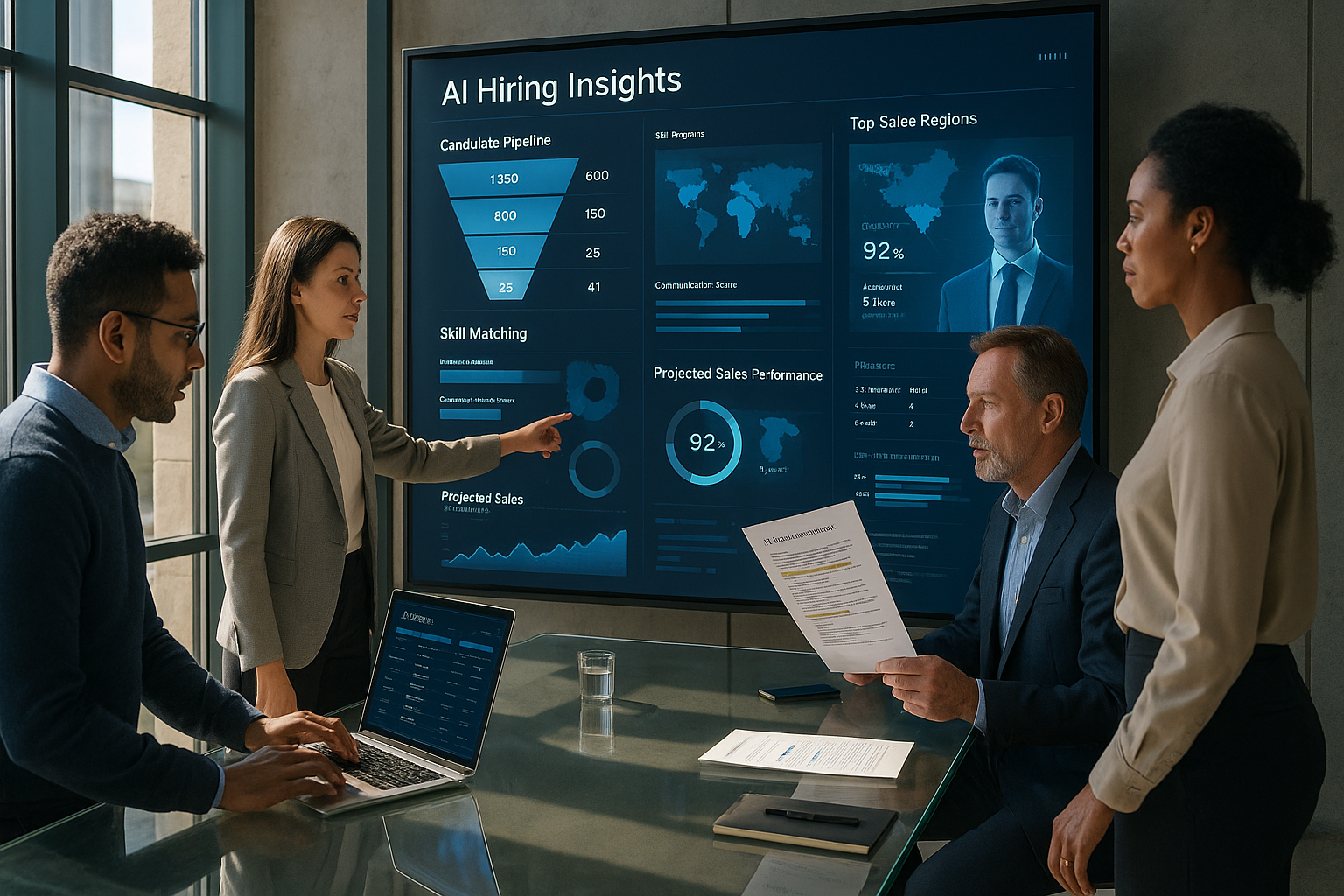
Rethinking Talent Acquisition: The Growing Impact of AI for Hiring in Sales Recruitment
For those leading teams and searching for sales excellence, the process of attracting, assessing, and onboarding high performing professionals remains a persistent challenge. Now, with advances in AI for hiring, employers are witnessing a pivotal change in how recruiting is planned and executed, particularly for roles where performance directly impacts company revenue. Businesses that embrace this shift gain the capability to swiftly identify and secure the best sales talent, minimizing delays and reducing mismatches that can hinder growth.
In this article, we’ll delve into the evolving landscape of AI powered recruiting for sales roles, examine specific use cases, and provide practical steps for integrating these technologies into your hiring workflows. Whether managing a rapidly growing startup or overseeing established teams, understanding AI’s role in the recruitment ecosystem is essential for building a future ready sales organization.
Many growing firms are already leveraging AI driven tools to outpace competitors. According to Forbes’ 2025 HR Tech report, nearly 45% of U.S. employers now anticipate that “AI in recruitment process” adoption will increase productivity and cut time to hire by more than a quarter. AI hiring tools analyze vast candidate pools, filter resumes, and even predict future sales performance using structured behavioral and contextual data, methods that human recruiters cannot reliably scale alone.
Book an introductory meeting to discuss how AI powered recruiting can transform your next sales hire: https://calendly.com/treeline inc sales/recruitment strategy discussion
Successful implementation of Artificial Intelligence Recruitment isn’t about removing the human touch from recruiting, but rather about strengthening it. By freeing your sales recruiters from manual screening, AI allows for deeper engagement during interviews and negotiations, where cultural fit and emotional intelligence are critical. The process also sharpens executive focus, enabling leaders to invest time where it matters most.
With these opportunities in mind, let’s explore precisely how AI is reshaping each phase of the modern sales recruiting funnel, and what steps employers can take to harness these changes for long term advantage.
From Talent Sourcing to Offer: How AI Powered Recruiting Streamlines Every Step
The traditional recruitment journey often involves mountains of resumes, countless introductory calls, and extended decision timelines. AI powered recruiting brings clarity, speed, and accurate matching to each stage, creating a clearly defined path from talent pool identification to final offer acceptance.
Sourcing and Screening: Advanced AI hiring tools can analyze millions of public profiles and resumes within seconds. By matching experience, skills, and employment history against a defined sales success profile, these algorithms filter out unsuitable candidates at an early stage. The best technologies go further, employing natural language processing to read between the lines, assessing soft skills, sales acumen, and leadership potential based on nuanced language or even social media activity.
Assessment and Insights: Beyond simple filtering, AI driven assessment platforms deliver robust analytics on candidate behavior and track record. For example, some platforms predict future sales quota attainment by correlating past role responsibilities and longevity with outcomes in similar markets. Recruitment analytics tools may also use interview speech analysis and simulated roleplay scenarios to evaluate negotiation skills or objection handling. According to a 2025 Harvard Business Review article, employers using AI assessment see 38% fewer post hire performance issues in quota carrying sales roles.
Candidate Experience: AI in recruitment process applications personalize communication, set clear expectations, and schedule interviews automatically, minimizing candidate drop off. This is especially valuable for senior sales leadership searches, where reputation and responsiveness can influence a candidate’s decision to move forward. Chatbots or intelligent scheduling assistants keep busy executives engaged and informed, ensuring a smooth progression from first contact to final steps.
Reference Checks and Background Analysis: AI manages compliance and credential verification in real time, flagging inconsistencies or gaps in resumes by aggregating data from multiple sources. These systems quickly compile digital footprints, supporting hiring teams in balancing speed with thorough vetting of high stakes sales leaders.
At the offer stage, AI hiring tools can benchmark compensation against market data, factoring location, experience, and current market dynamics. This results in competitive, data backed offers that align with candidate expectations, helping avoid lengthy negotiations or lost candidates.
For employers looking to stay ahead, integrating AI solutions across the recruiting lifecycle means productivity gains, more objective decision making, and stronger, retention focused hires. As companies seek specialized partners, some, like executive sales recruiters, offer hybrid models, combining proprietary AI technology with experienced human judgment for best in class results.
Overcoming Challenges and Ethical Considerations When Using AI in Recruitment Process
While the benefits of AI powered recruiting are clear, this transition also introduces new areas of focus for hiring managers and HR teams. When implementing “Artificial Intelligence Recruitment” strategies, leaders must prioritize ethical deployment, minimize bias, and remain vigilant about potential legal and compliance risks.
Bias and Fairness: AI systems rely on historical data to build candidate models and benchmarks. If historical sales hiring practices have unintentionally favored certain backgrounds or demographics, those patterns can carry forward in AI recommendations. The most effective sales recruiting agencies routinely audit and retrain their AI tools to detect and minimize unconscious bias, adjusting algorithms to prioritize inclusive candidate pools. Engaging external auditors or using open source fairness tools can provide further assurance that AI systems align with DE&I goals.
Transparency and Explainability: Employers need clear, interpretable justifications for AI driven decisions, especially when candidates request feedback or challenge outcomes. New regulations, such as those enacted in states like New York and California, increasingly require transparency around automated decision making in recruitment. Documenting criteria, maintaining audit logs, and choosing partners who prioritize explainability are becoming standard. By working with vendors experienced in both AI and human led recruitment, such as Treeline, businesses can navigate this landscape confidently.
Data Privacy and Security: With sensitive candidate data often moving between platforms and AI engines, robust data governance is critical. Employers must ensure compliance with all federal and state privacy regulations, implement encryption, and limit access to personally identifiable information throughout the recruiting lifecycle. This not only builds trust with candidates but also protects the company from costly legal exposure.
Human Oversight: At no stage should AI for hiring remove experienced judgment from the process. Successful sales hiring depends on a balanced approach, leveraging automation for efficiency, but dedicating human recruiters and senior decision makers to evaluate intangible qualities like values, leadership style, and long term fit. Recent research from the Society for Human Resource Management (SHRM) suggests that pairing AI with structured, human interviews results in a 25% reduction in hiring regret, compared to automation only strategies.
For organizations navigating these challenges, an experienced recruiting partner is crucial. By selecting agencies with proven AI driven processes, clear diversity policies, and established data security protocols, employers reduce risk and create a foundation for sustained hiring success.
Book an introductory meeting to see how AI can deliver a competitive edge for your team’s hiring outcomes: https://calendly.com/treeline inc sales/recruitment strategy discussion
How to Choose and Implement the Right AI Hiring Tools for Sales Teams
As an employer, selecting AI technology that aligns with your unique sales recruitment needs requires a structured approach. Too often, companies invest in the latest tools without mapping functionality to goal oriented outcomes, leading to fragmented workflows and inconsistent results. To avoid these pitfalls, here is a proven framework for choosing and deploying AI in your recruitment process:
- Define Your Sales Hiring Profile: Before reviewing any platforms, clarify what defines success in your sales roles. Outline must have competencies, experience, and behavioral attributes. Examine your current top performers to create a baseline profile that AI tools should target.
- Assess Integration with Existing Systems: Evaluate how well AI powered recruiting solutions embed within your ATS, CRM, and communications infrastructure. A seamless connection speeds adoption, prevents data silos, and ensures a unified candidate journey from first touch to onboarding.
- Prioritize Transparency and Control: Select tools that provide both recruiting leaders and hiring managers with real time dashboards, transparent scoring, and customizable algorithms. The ability to audit AI decisions and override recommendations is critical, especially for high stakes sales hires.
- Focus on Compliance and Security: Ensure any provider complies with all current and emerging state/federal requirements for AI in the recruitment process, including explainability, consent, and data storage rules. Ask providers to explain how they handle candidate information, whether they anonymize data, and how often models are reviewed for bias.
- Pilot and Benchmark Results: Start with a focused pilot project, such as screening for one sales function or region. Measure AI driven hires against traditional placements, comparing time to fill, manager satisfaction, and early performance indicators. Use this data to decide whether to expand adoption across other divisions or leadership levels.
- Foster Cross Functional Alignment: Involve both sales and HR leaders when deploying Artificial intelligence recruitment systems, and schedule regular feedback loops to address emerging concerns or improvement opportunities.
- Invest in Training: Ensure recruiters and hiring managers understand both technology functions and their decision points in the process. Combining human expertise with AI’s capabilities maximizes results and ensures a positive candidate experience.
By carefully mapping objectives, building compliance into your process, and choosing platforms with scalable integration and transparency, your organization can realize the full value of AI for hiring, transforming recruitment into a strategic driver for sales growth.
Top Trends and What’s Next: The Future of AI Hiring in Sales Recruiting
The evolution of AI in recruitment is far from static. Employers aiming for a competitive edge must stay abreast of the latest advancements shaping tomorrow’s sales hiring landscape. Here are several developments poised to redefine what’s possible for building high impact sales teams:
Hyper Personalized Candidate Outreach: Future AI powered recruiting engines will tailor every candidate interaction using preferences, sales methodologies, and career aspirations gleaned from digital footprints. This level of personalization can increase response rates and keep top tier professionals engaged throughout longer enterprise sales cycles.
Real Time Market Intelligence: AI hiring tools will provide instant data on compensation benchmarks, competitor hiring trends, and candidate availability, enabling recruiters to adjust strategy on the fly. Automated market mapping will ensure hiring teams stay informed even as business conditions shift unpredictably.
Integrated Sales Performance Forecasting: Employees hired through AI enhanced systems will soon be tracked against predicted performance models, allowing organizations to refine their hiring templates in real time and invest more in high yield candidate segments.
Diversity First Design: As pressure grows for equitable workforces, expect AI to incorporate anonymized demographic reporting, predictive inclusion analytics, and scenario testing, delivering more diverse candidate slates without sacrificing performance standards.
Conversational AI and Predictive Interviewing: Advances in natural language processing are producing conversational AI partners that participate actively in interviews, offering follow up questions and interpreting candidate sentiment in real time.
According to the 2025 LinkedIn Global Talent Trends, companies that use AI within their sales hiring report a 32% reduction in cost per hire and experience more consistent ramp times for new hires. These quantifiable improvements signal a permanent change in how successful firms approach sales talent acquisition.
Sales organizations intent on long term success should prepare to regularly update their AI strategies, evaluating emerging tools while safeguarding human expertise at pivotal decision points.
Frequently Asked Questions: Employers’ Guide to AI for Hiring in Sales Recruitment
How does using AI for hiring improve the quality of sales hires?
AI driven recruiting platforms evaluate a much wider array of candidate data than traditional methods can manage, surfacing insights on skill fit, cultural alignment, and sales potential. This thoroughness improves the odds of identifying candidates who not only meet experiential requirements but also demonstrate high potential for quota attainment and team integration. AI assessment also minimizes unconscious bias, broadening the candidate pool for greater overall team strength.
What risks should employers consider when implementing AI hiring tools?
Key risks include embedding existing biases from historical data, lack of transparency around automated decision making, data privacy breaches, and poor integration with existing recruiting workflows. Employers must select vendors with strong compliance protocols, conduct regular audits of algorithms, and always involve human oversight in crucial final decisions.
Can AI powered recruiting replace human sales recruiters?
No, AI augments, rather than replaces, human recruiters. AI handles repetitive, data intensive tasks such as sourcing, resume screening, and initial communication, freeing recruiters to focus on high value activities like relationship building, cultural assessment, and negotiation. The best hiring outcomes come from the synergy of automated analysis and human intuition.
How do AI hiring tools support diversity and inclusion goals?
AI can anonymize resumes, flag underrepresented talent, and surface candidates based solely on skills and experience, diminishing bias in early stages. Many AI platforms now include fairness auditing and reports on diversity metrics. However, these features are most effective when paired with intentional human oversight and regular review to address any new forms of bias that may emerge.
What’s the timeline for seeing results from AI driven sales hiring initiatives?
Most employers notice increased time to hire and improved candidate quality within weeks of implementing AI hiring tools, especially for entry and mid level roles. For executive or specialized searches, the advantages emerge as predictive analytics and enhanced matching reduce late stage fall offs and hiring misfires. End to end process improvements become clear after several completed cycles, often within three to six months depending on hiring volume and complexity.
Share This Story, Choose Your Platform!
Related Posts



What our happy clients are saying
Treeline Inc. provided us with the most candidates that aligned with our needs and were of the highest quality.

Dr. Jeffrey Klein Head of North America Sales, Satchel Pulse
Treeline Inc.’s collaborative, flexible, and communicative approach resulted in a smooth partnership. Beyond their recruitment expertise, their unique sourcing model was efficient and effective.

Sera Holt Director of Operations, LNS Research
Their professionalism was outstanding. Treeline Inc. was extremely thorough and ensured that we were on the same page before they started looking for candidates. They listened to us and did a great job working with the candidate to close out the process.

Cate Grant AVP Customer Success, Nasdaq
Thanks to Treeline Inc.’s intricate and thorough screening process, the company is able to hire six high-quality candidates that fit perfectly in the company’s culture. The team is highly receptive to concerns, and internal stakeholders are impressed with their unique recruitment abilities.

Anna McKean Sales Recruiter, Insider Intelligence
Treeline Inc. has been qualified individuals throughout a five-year-long engagement. They’ve made numerous placements of talented and qualified individuals for our business.

Michele St Laurent VP of HR, The Institute for Applied Network Security

Let Us Help You Source the Sales Talent You Need
Whether you’re building a team or replacing a key role, our Candidate Sourcing Platform provides a fast, flexible, and employer-focused solution.
Tell us more about your business and how we can help.
Treeline Inc.
Your Award-Winning Sales Recruitment Partner
15 Lincoln Street, Suite 314, Wakefield, MA 01880